Buying
How wide should a stair runner be?
The formula for stair runner width is simple. The harder part is deciding the margin that goes into it, because that decision is shaped by your staircase, your household and your taste, not by a single rule.
Written by the StairRunner.co editorial team · Updated 4 September 2026
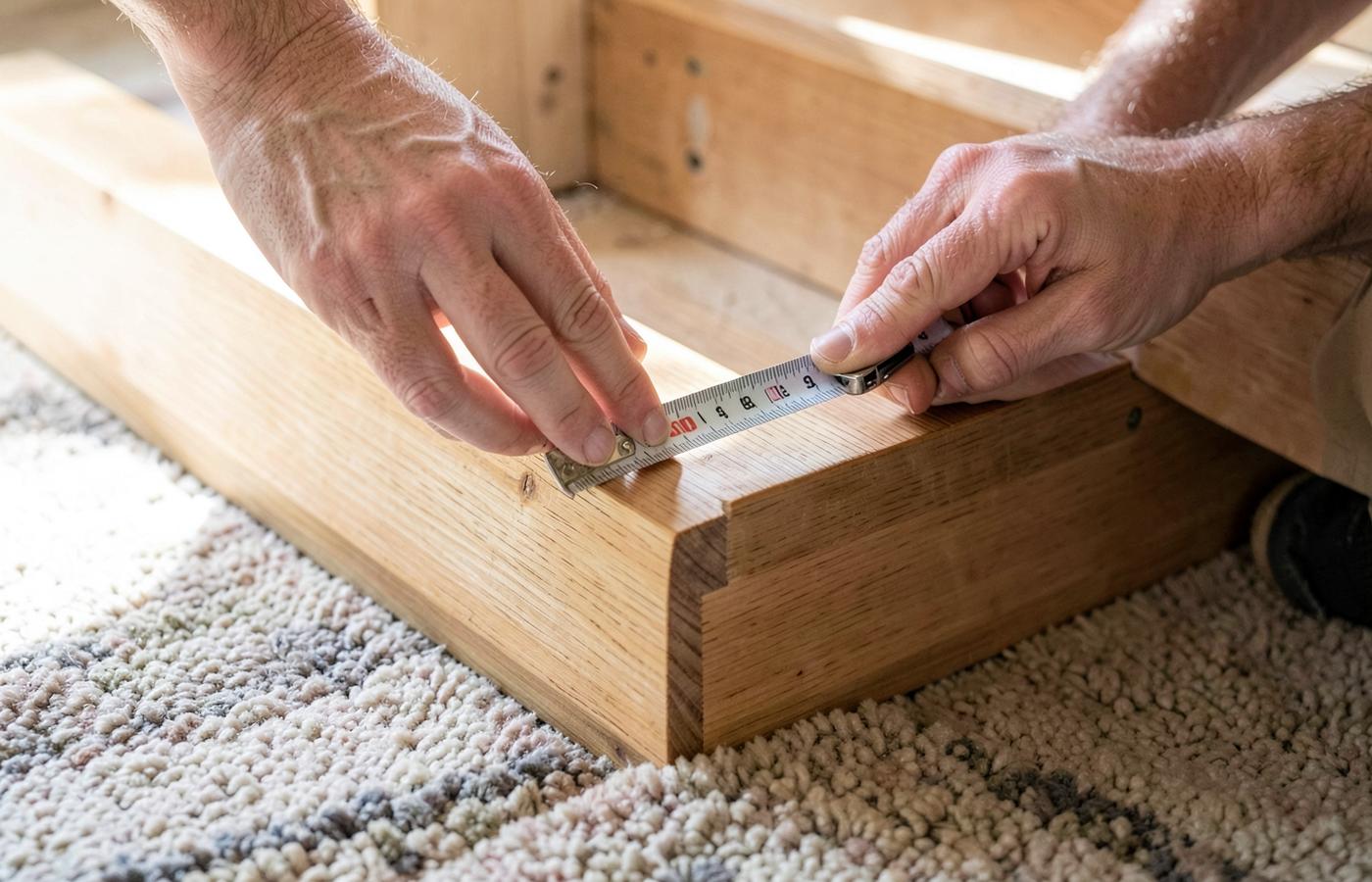
Start with what the staircase can support, not a target number
It is tempting to search for a single recommended width and apply it, but a runner width that looks generous on a wide, open staircase can look cramped or fussy on a narrower one, and the reverse is equally true. The staircase itself — its clear width, its construction, and the condition of the exposed tread and stringer — is the starting point, and the household's priorities layer on top of that.
The factors that actually move the decision
| Factor | Pulls the decision toward |
|---|---|
| Attractive original timber | Wider margin, to keep more of it on display |
| Worn, painted or damaged treads | Narrower margin or a genuinely wide runner, to cover more of the surface |
| Households with pets or small children | Narrower margin, for more secure coverage across the tread |
| Households prioritising quiet, warmth underfoot | Narrower margin or a wide runner |
| A period or restored staircase | Wider margin, to treat the runner as a feature rather than a cover |
| A tight budget | Whichever margin uses a standard stock roll width without a bespoke cut |
Scenario: a narrow Victorian terrace staircase
A typical narrow terrace staircase, often around 750–850 mm clear, has little room to spare. A generous margin here quickly starts to look like a thin ribbon of carpet rather than a proper runner, so most fitters would suggest a margin closer to 60–90 mm per side, keeping the runner as close as reasonably possible to the full available width while still leaving a visible, deliberate strip of timber either side.
Scenario: a wide, open-plan hallway staircase
A wider staircase, particularly one built with an open string and attractive balusters, can carry a much more generous margin without looking under-furnished. Here the decision often comes down to whether the household wants to showcase the staircase's joinery — in which case a wider margin makes sense — or wants a warmer, softer stair, in which case a narrower margin or a genuinely wide runner suits better. See wide stair runners for when going wide specifically pays off.
Scenario: a staircase with winders
Winders complicate width because each pie-shaped tread narrows toward the newel post. The margin you would happily use on a straight flight can leave almost nothing at the tight end of a winder tread. In this situation, decide the margin from the straight flight and then check it specifically against the narrowest winder tread before finalising, rather than assuming the straight-flight figure applies throughout. Full guidance on handling the transition is in fitting a runner around winders.
How household life should factor in
Beyond pure proportion, think about who actually uses the stairs. A household with young children learning to walk down stairs benefits from more secure footing across the full tread, which argues for a narrower margin. A household with an elderly resident who uses a stick or holds the handrail closely benefits from a runner that extends close enough to the wall or baluster line that their footing lands on carpet rather than bare timber near the edge. Pets add their own consideration, covered in more detail in washable and pet-friendly stair runners, though width itself plays a smaller role there than fibre and pile choice.
How width decisions ripple into other choices
Deciding width early, before choosing a pattern or ordering stair rods, avoids having to rework those decisions later. A bold pattern with a wide repeat can look off-centre if the final width does not accommodate it symmetrically, so check pattern centring against your chosen width before ordering — see stair runner patterns. Similarly, if you plan to fit with decorative rods, the rod length is derived directly from the runner width plus a small overhang, so ordering rods before settling on a final width risks buying the wrong length — see stair rods.
Working with what your carpet supplier actually stocks
Once you have a target width in mind from the margin decision, check it against the roll widths your chosen carpet is genuinely available in. Rounding to the nearest stock width almost always changes the margin slightly, sometimes by a centimetre or two either way. That is normal and rarely noticeable once fitted — the value of doing the margin calculation first is to know roughly where you are aiming, not to hit an exact figure to the millimetre. Bespoke cut-and-bound widths are available from most suppliers where a stock width will not get close enough; see custom stair runners for how that process works and what it typically adds to lead time.
A short decision checklist
- Measure the clear tread width at the narrowest point of the flight.
- Assess the exposed timber — worth showing, or better mostly covered?
- Think about who uses the stairs and how much coverage they need.
- Choose a margin, apply it equally both sides, and calculate the resulting width.
- Check that width against actual available roll widths or a custom cut option.
- Re-check the margin against winders or any narrower sections separately.
When to ask for a second opinion
If the staircase is unusual — a curved flight, an irregular stringer, a mix of open and closed sections, or a particularly fine piece of joinery worth preserving — it is worth asking a fitter or supplier to visit and advise on width in person rather than relying on measurements and photographs alone. Proportion is genuinely easier to judge standing at the foot of the actual staircase, and a short site visit before ordering is far cheaper than reordering carpet cut to the wrong width.
Once width is settled, the next step is working out how much runner to order along the length of the flight, which is covered in how to calculate stair runner length and handled automatically by the stair runner length calculator.
Why the "one right answer" instinct causes problems
Many people start this decision looking for a single recommended figure, in inches or centimetres, that applies to any staircase. That instinct is understandable but works against a good result, because two staircases with an identical clear width can call for different margins depending on the quality of the timber, the presence of children or pets, and the overall style of the house. Treat any generic figure you come across as a starting range to test against your own staircase, not a target to hit exactly.
How lighting affects the perceived width
A margin that looks generous under bright daylight from a landing window can look different under the dimmer, warmer lighting many staircases have in the evening, when most households actually use the stairs most. Where possible, view a sample or a taped-out margin at the time of day the staircase gets the least natural light, since that is when a narrow strip of timber is most likely to look like an afterthought rather than a deliberate design choice.
Reconciling disagreement between household members
It is common for one person in a household to prefer showing off original timber and another to prioritise warmth and coverage underfoot. Where this happens, it helps to separate the two underlying questions — how much timber to expose, and how the runner will feel and perform day to day — because they can sometimes both be satisfied by adjusting fibre and pile choice rather than only width. A narrower margin with a higher-quality, warmer pile can deliver much of the comfort a wider runner would, while still keeping more timber on display than the wide-runner camp might otherwise choose.
Revisiting the decision after living with the staircase bare
If the staircase has recently had its old carpet or covering removed and the timber is currently bare, live with it uncovered for a week or two if the schedule allows before finalising a margin. Seeing the actual grain, colour and condition of the treads in daily use — rather than in a single inspection — often changes the balance between wanting to show it off and wanting to cover it, and it is a far cheaper adjustment to make before ordering than after.
Documenting your decision for a future refit
Once you settle on a margin and width, keep a short note of the figures, the roll width used, and the reasoning behind the margin choice. Staircases are refitted only occasionally, often a decade or more apart, and a future refit is far easier when the household can simply repeat a margin that worked well rather than re-deriving it from scratch, especially if the person who made the original decision has moved out or the house has changed hands in the meantime.
It is also worth noting whether the household was happy with the balance struck between coverage and exposed timber after a year or two of daily use, since preferences formed at the point of fitting sometimes shift once the reality of cleaning, wear and everyday footfall settles in.
If it was not, the fix is rarely a full refit — sometimes a wider or narrower runner can be fitted over the same underlay and gripper, provided the change in margin is modest, which keeps the cost of a correction well below that of a first-time installation.
Frequently asked questions
- Is there one correct stair runner width?
- No. There is a correct method — clear tread width minus two margins — but the margin itself is a style and household decision, not a fixed number. See the worked formula in what width should a stair runner be.
- What width do most people choose for a standard UK staircase?
- On a typical domestic staircase of roughly 850–950 mm clear width, many households land on a margin of around 100–125 mm per side, which usually points toward a runner in the 63–70 cm (25–27 in) region, but confirm against your own measurements rather than assuming this fits your stair.
- Should I choose width based on the staircase or the carpet I like?
- Choose it based on the staircase first. A carpet you love in the wrong width either forces an unbalanced margin or, if cut down, changes the pattern positioning. Decide the margin from the stair, then find carpet available near that width.
- Does the width decision affect anything else in the project?
- Yes — stair rod length, pattern centring, and how much of the existing tread finish stays visible are all set by width, so it is worth deciding early rather than after choosing a pattern or rods.
- What if my staircase has a mix of straight flight and winders?
- Decide the margin from the straight flight, then check it against the narrowest point of each winder tread. If the winder cannot take the same margin, it is usually better to hold the margin consistent and accept a very slightly different overall width, rather than an inconsistent margin.
- Can two people reasonably disagree about the right width for the same staircase?
- Yes, and that is normal — width sits at the point where measurement, taste and household priorities meet. The method here helps narrow the range; the final call is a judgement about how much timber a household wants on display.
Related guides
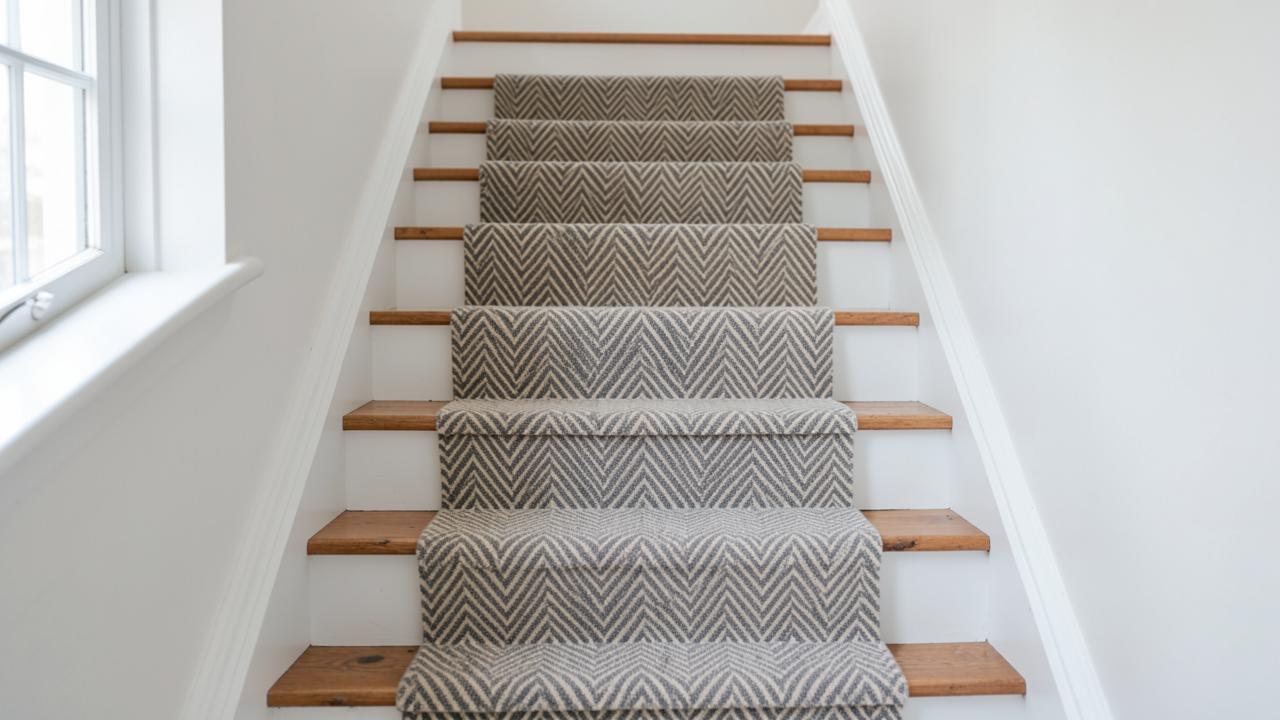 DesignStair Runner Patterns ExplainedHerringbone, chevron, stripes, plaid, geometrics and animal prints judged by how they behave on a staircase.
- MeasurementWhat Width Should a Stair Runner Be?How to set runner width and side margins from your stair width, stringers, balusters and pattern.
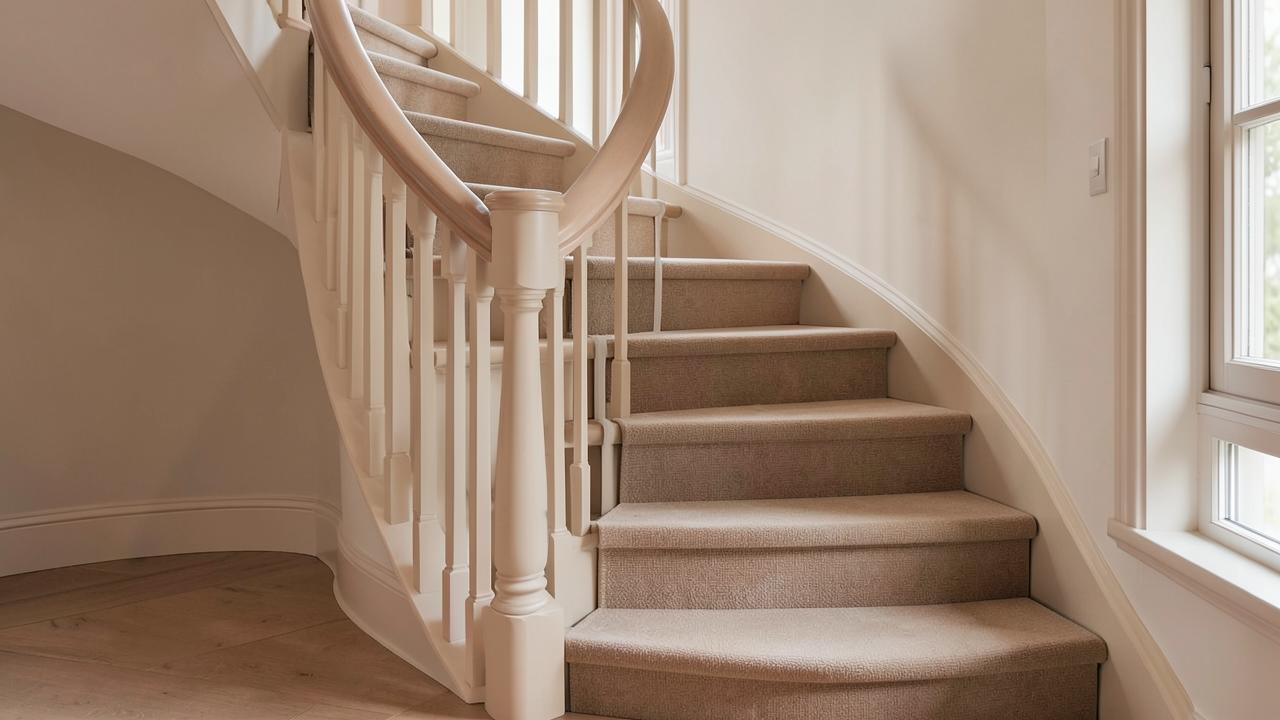 MeasurementRunners on Winder, Curved and Open StairsMeasuring and fitting where treads are not rectangles: winders, pie steps, curves and open-sided flights.
- MeasurementHow to Calculate Stair Runner Length, Step by StepThe full method for calculating stair runner length by hand: per-step arithmetic, landings, winders, waste allowance and worked examples for straight and turning flights.
- MeasurementWide Stair Runners: When Full-Width Coverage WorksWhen a wide or near full-width stair runner suits a staircase, how it changes fitting, cost and upkeep, and how to avoid the ribbon look it can create if done badly.