Materials
Linen stair runners: Guide to luxury & care
Linen offers a unique, matte aesthetic that synthetic fibres cannot replicate, but its performance on a staircase requires careful management and realistic expectations.
Written by the StairRunner.co editorial team · Updated 4 September 2026
The unique appeal of flax fibres
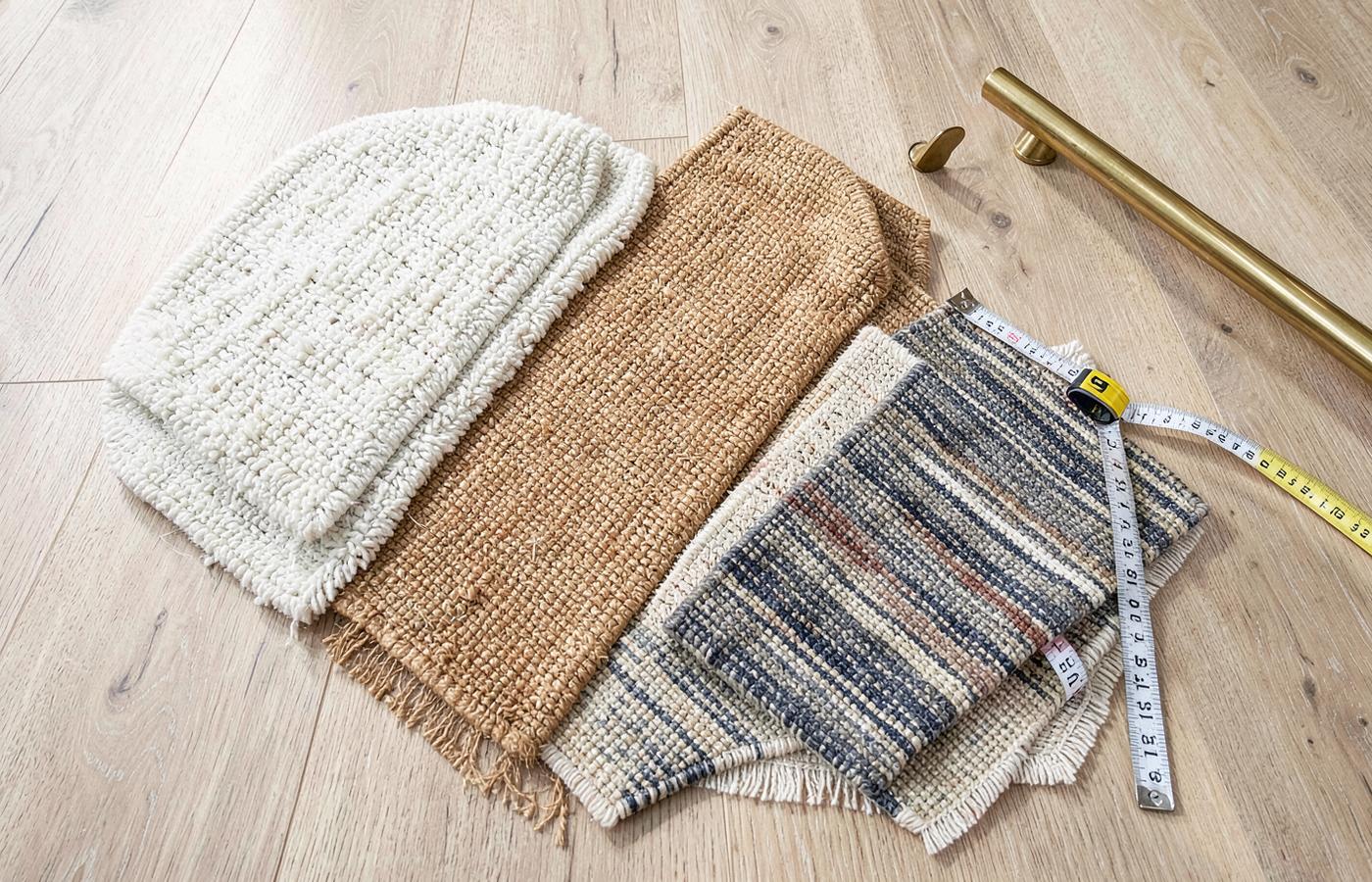
Linen is derived from the flax plant, a crop that has been cultivated for millennia for its strong, long fibres. In the world of interior design, linen is prized for its 'slubby' texture—the natural variations in the thickness of the yarn that give it a hand-woven, artisanal appearance. On a staircase, this translates to a runner that feels organic and understated, perfectly suited to coastal, Scandinavian, or rustic-modern interiors. Unlike the slight sheen of some wools or the plastic-like reflection of low-end synthetics, linen is almost entirely matte, absorbing light rather than reflecting it. This makes it an excellent choice for well-lit hallways where glare might be an issue. However, the very properties that make linen beautiful in a curtain or a cushion—its lack of synthetic uniformity—are the same properties that make it a challenge underfoot.
The flax fibre is naturally hollow and highly absorbent, which gives it a cool feel but also means it reacts to the environment. In humid conditions, linen can slightly expand, and in dry conditions, it can contract. While this is less of an issue in a wall-to-wall carpet, in a tensioned stair runner, these micro-movements can affect the tightness of the fit over many years. When choosing linen, you are choosing a material that lives and breathes, rather than one that remains static.
Furthermore, linen has a specific 'handle' or feel. It is crisper than wool but softer than sisal. For those who prefer to walk around their home in bare feet, linen offers a pleasant tactile experience that isn't as prickly as coir or jute, yet provides more grip than a silky viscose. This balance of comfort and friction is one of its few practical advantages on a staircase.
Structural limitations on the staircase
To understand why linen is a niche choice for stairs, one must look at the physics of the fibre. Most stair-suitable carpets are made from wool because wool is naturally elastic. A wool fibre can be stretched up to 30% beyond its original length and still return to its former shape. Linen, by contrast, has almost zero elasticity. It has high tensile strength—it is very hard to break a flax fibre by pulling it—but it has no memory. Once it is stretched or compressed, it stays that way.
| Requirement | Linen Performance | Expert Assessment |
|---|---|---|
| Elasticity | Very Low | Linen does not 'bounce back'; it tends to hold creases and indentations. |
| Abrasion Resistance | Moderate | Good tensile strength but prone to surface fuzzing in high-traffic zones. |
| Stain Resistance | Low | Hollow fibres suck in liquids; water spots are common and difficult to remove. |
| Colour Fastness | Moderate | Natural dyes can fade in direct sunlight; UV protection is recommended. |
| Frictional Grip | High | The matte texture provides good natural grip for bare feet and socks. |
The problem of 'nosing fatigue'
The nosing is the most vulnerable part of any stair installation. It is where the foot strikes with the most force and where the carpet is stretched most tightly. Wool fibres have a natural 'crimp'—a microscopic spiral shape that acts like a spring, allowing the fibre to be compressed and then return to its original shape. Linen lacks this crimp. It is a straight, stiff fibre. When you step on the edge of a linen runner, you are essentially crushing the fibres against the timber nosing.
Over time, this results in 'nosing fatigue', where the pile becomes permanently flattened and may even begin to look shiny or worn through. This is not just an aesthetic issue; flattened pile can become slippery, potentially compromising the safety of the flight. To mitigate this, a linen runner must be woven with a very high density—much higher than a standard linen rug—to provide enough physical material to cushion the impact.
If you are considering linen for a main staircase used by a large family, be prepared for the 'worn-in' look to appear much sooner than it would with a wool-rich blend. For many homeowners, this patina is part of the charm—much like the creases in a linen suit—but for those who want their stairs to look pristine for a decade, it can be a source of frustration. Understanding the difference between 'wear' (the physical breakdown of fibres) and 'appearance retention' (how long it looks new) is crucial when specifying linen.
Installation: The need for extreme tension
Installing a linen runner is not a task for a DIY novice or a general carpet fitter who lacks experience with natural flatweaves. Because linen has so little natural stretch, getting it to sit perfectly flat against the treads and risers requires significant physical force and specialized tools. If the runner is not tensioned correctly, it will eventually 'bag' or ripple, creating a trip hazard. This is exacerbated by the fact that linen can move with changes in humidity.
The choice of underlay is paramount. You cannot use a standard, soft domestic underlay with linen. You need a firm, dense product—often a crumb rubber or a very high-density felt—that provides a solid foundation. This limits the amount of 'give' when a foot lands, which in turn reduces the amount the linen is required to stretch. If the underlay is too soft, the linen will be forced to deflect further into the pad, which is the primary cause of premature stretching and failure in linen installations.
Furthermore, the fixing method must be robust. Staples or grippers alone may not be enough if the weave is particularly loose. Some specialist fitters recommend a 'double-stick' method or using specifically designed grippers for natural fibres to ensure the runner remains anchored. If you are using stair rods, remember that they are decorative; they will not hold a loose linen runner in place if the primary fixings fail.
Visual depth and colour palettes
Where linen truly shines is in its relationship with colour. Because the fibres are natural and vary in their uptake of dye, linen runners often have a depth of colour that synthetics lack. A 'grey' linen runner isn't just one shade of grey; it is a microscopic mosaic of silvers, charcoals, and stones. This multi-tonal quality is excellent for hiding the light dust and lint that accumulate on stairs between vacuuming sessions.
Popular linen palettes tend towards the neutral: oatmeal, sand, dove grey, and indigo. These colours complement the natural texture of the flax. However, be wary of very pale linens in high-traffic homes. While a cream linen runner looks stunning in a magazine, in a UK home with wet winters and muddy shoes, it will require constant professional attention. If you love the look but have a busy house, consider a darker mid-tone or a linen-wool blend that offers the same aesthetic with a more forgiving nature.
One often overlooked aspect of linen is its lightfastness. Natural fibres, especially when dyed with organic pigments, can be sensitive to UV light. If your staircase is flooded with direct sunlight from a large window or skylight, a dark linen runner may fade unevenly over time. This 'sun-bleaching' can be attractive in a rustic setting, but it can look patchy if only part of the flight is exposed.
Managing expectations: Wear and tear
It is important to be honest: linen is not a 'forever' carpet for a high-traffic staircase. In a typical household, a well-maintained wool runner might last 15 to 20 years before looking tired. A linen runner in the same environment might only last 5 to 8 years before the traffic lane becomes obvious and the nosings begin to show their age. This doesn't mean you shouldn't buy it, but it does mean you should view it as a luxury decorative element rather than a purely functional one.
For those who live in 'shoes-off' households, the lifespan is significantly extended. The abrasive grit carried on the soles of outdoor shoes is the primary enemy of linen; it gets trapped between the stiff fibres and acts like sandpaper, cutting through the flax as you walk. Regular vacuuming with a suction-only head (avoiding heavy beater bars that can fuzz the surface) is the best way to preserve the runner's integrity.
Another factor is 'pilling'. Just as a linen sweater might develop small balls of fibre in areas of friction, a linen runner can develop surface fuzz. This is more common in cheaper, loosely spun linen. High-quality floor-grade linen uses longer 'line' fibres which are less prone to this, but it is never entirely immune. A fabric shaver can be used to carefully remove these pills, but it is a temporary fix for a structural reality of the fibre.
Comparison: Linen vs Other Natural Fibres
When people look at linen, they are often also considering sisal,jute, or seagrass. Linen is the softest of these underfoot, but also the most delicate.
- Linen vs Sisal: Sisal is much tougher and more resistant to wear, but it is also much harsher underfoot and can be dangerously slippery. Linen offers better grip and a softer feel.
- Linen vs Jute: Jute is similar in its lack of durability and sensitivity to water, but jute has a chunkier, more rustic weave. Linen is more refined and 'tailored'.
- Linen vs Seagrass: Seagrass is naturally waxy and water-resistant, making it better for spills, but it cannot be dyed, so you are limited to natural greenish-tans. Linen offers a much wider design palette.
- Linen vs Wool: There is no contest in terms of performance;wool wins on every technical metric. You choose linen for its specific, flat, matte look that wool cannot perfectly emulate.
Cost factors and value
Linen is an expensive raw material, and the weaving process for floor-grade linen is specialized. Consequently, you should expect to pay a premium for a genuine linen runner. When budgeting, don't just look at the cost per linear metre; factor in the higher cost of the specialized firm underlay and the potential need for more frequent replacement.
In the UK market, linen runners are often found in the 'bespoke' or 'boutique' categories. You won't typically find them in big-box retail stores. This exclusivity adds to the cost but also ensures that you are getting a product that hasn't been mass-produced with corners cut on density or fibre quality. Always ask for a sample and perform a 'rub test' with your thumb—if the fibres move easily or begin to fuzz with just a little pressure, it is likely too loosely woven for stair use.
Also consider the cost of professional cleaning. Linen cannot be easily cleaned with rented DIY carpet cleaners, which often use too much water and can leave the runner drenched, leading to shrinkage and water marking. You will need a professional who understands natural fibres and uses 'dry' or 'low-moisture' methods, which typically costs more than standard steam cleaning.
Linen Blends: The sophisticated compromise
If you are enamoured with the linen aesthetic but terrified by the maintenance, look for blends. A wool-linen blend is an excellent compromise. The wool provides the 'spring' and soil-hiding capabilities, while the linen provides that characteristic matte texture and slubby look. Typically, a blend with 30-40% linen will still look like a linen product but will behave much more like a wool one.
Some modern synthetics also do a remarkable job of mimicking linen. These are often made from polyester or polypropylene, and while they lack the 'soul' of a natural fibre, they are bleach-cleanable and incredibly durable. If your staircase is the main artery of a home with kids and pets, a 'linen-look' synthetic is almost certainly a better practical choice than the real thing. Check polypropylene optionsfor high-traffic alternatives.
The 'Sound' of Linen
An often-ignored benefit of linen is its acoustic property. Unlike synthetic fibres that can have a 'plastic' sound when walked upon, or hard sisal that can be quite loud, linen has a soft, dampening effect on sound. Because it is a dense, non-reflective material, it absorbs the high-frequency 'click' of heels and the 'thud' of heavy footsteps. While it doesn't offer the deep acoustic insulation of a thick wool pile, it contributes to a calmer, quieter atmosphere in a hallway.
This makes it particularly suitable for older UK terraced homes where sound can travel easily between floors. A linen runner over a good crumb-rubber pad can significantly reduce the 'echo' of a staircase, making the transition between floors feel more intimate and less industrial.
Maintaining a Linen Runner: A Daily and Weekly Routine
To get the longest life out of a linen runner, your maintenance routine must be consistent. Grit is the silent killer of flax fibres. Because the fibres are stiff, they don't allow grit to sink to the bottom of the pile as easily as wool does. Instead, the grit sits near the surface where it is ground against the fibres by every footfall.
- Vacuuming: At least twice a week. Use a vacuum with strong suction but switch off the rotating beater bar or use a dedicated hard-floor tool. The mechanical action of a brush can abrade the flax and lead to premature fuzzing.
- Spill Management: Speed is everything. Keep a clean, white cotton cloth nearby. If a spill occurs, blot—never rub. Rubbing will push the liquid deeper into the hollow fibre and can distort the weave permanently.
- Rotation: While you can't rotate a fitted runner, you can monitor the wear. If you notice a specific tread is wearing faster, check if there is a loose nosing or a problem with the underlay that is exacerbating the friction.
- Professional Care: Once every 12-18 months, have the runner professionally cleaned by a specialist. This removes the deep-seated grit that vacuuming misses and can help to 'reset' the fibres.
Environmental impact and sustainability
For the environmentally conscious homeowner, linen is one of the best choices available. Flax is a remarkably sustainable crop. It requires significantly less water and fewer pesticides than cotton, and it can grow in poor soil conditions where other crops would fail. Every part of the flax plant is used—the seeds for linseed oil and the fibres for fabric—meaning there is very little waste.
Furthermore, a 100% natural linen runner is fully biodegradable at the end of its life, provided it hasn't been backed with synthetic latex or plastic. In an industry often criticized for its reliance on petroleum-based synthetics, linen represents a return to a more circular, responsible way of decorating our homes. It is a material that comes from the earth and can safely return to it.
Technical details for the perfect fit
When ordering your runner, consider the width of the runnercarefully. A wider runner shows more of the material but leaves less of the wood exposed, which can make the staircase feel narrower. For linen, a slightly narrower reveal can sometimes help the runner feel more like a 'pathway' and less like a heavy carpet, which suits the breezy, light aesthetic of the fibre.
Also, pay attention to the binding. Linen runners often look best with a simple, tonal cotton or linen binding. A heavy leather or shiny faux-silk border can clash with the humble, natural character of the flax. A 'blind stitch' or 'invisibly bound' edge is the ultimate luxury option, where the edge is turned under so no binding is visible at all, giving a clean, architectural finish to the stairs.
Is it right for you?
In summary, linen is a specialist choice. It is for the homeowner who values texture over tenacity, and who is willing to put in the extra effort to maintain a natural product. It is not a 'fit and forget' solution. If you have a busy home with children and pets, or if your stairs are the primary route for muddy boots, we would suggest looking atmore durable alternatives. However, for a quiet, sophisticated home where the staircase is a design statement, linen is hard to beat for pure, understated elegance.
Before committing, always order a large sample. Place it on a step, walk on it, and see how it catches the light at different times of day. Linen is a chameleonic material, and seeing it in your own home is the only way to know if its unique charms outweigh its practical challenges.
Frequently asked questions
- Is linen a durable choice for a main staircase?
- Linen is significantly less durable than wool or nylon. It lacks the natural elasticity of wool, meaning it is prone to permanent creasing and crushing on stair nosings. It is generally better suited to low-traffic secondary stairs or decorative landings.
- How does linen handle moisture compared to other fibres?
- Linen is highly absorbent. While it dries relatively quickly, it is very susceptible to water spotting and staining. Any liquid spill can cause the fibres to swell and change texture permanently, making it a high-maintenance choice for busy homes.
- Can you get the linen look with more durability?
- Yes, many manufacturers offer 'linen-effect' runners made from wool or high-quality synthetics. These mimic the flat, matte weave and natural slub of linen while providing the structural integrity and stain resistance required for a staircase.
- Does linen require a special type of underlay?
- A linen runner requires an exceptionally firm, high-density underlay. Because the linen fabric has little 'bounce back', a soft pad would allow the material to stretch and bag under foot traffic, leading to dangerous ripples on the steps.
- Will a linen runner pill or fuzz over time?
- Linen fibres are long and strong, but they can experience 'fibrillation' where small fibres break off and create a fuzzy appearance in high-wear areas. This is particularly noticeable on the edge of the stair nosing where friction is highest.
- Is linen fire resistant for domestic stairs?
- Linen is a cellulose-based natural fibre and will burn more readily than wool. While most high-end linen floor coverings are treated with flame retardants to meet UK building regulations, they do not have the inherent self-extinguishing properties of wool.
Related guides
- MaterialsStair Runner Materials ComparedWool, nylon, polypropylene, sisal and jute judged on stair-specific wear, comfort, cleaning and safety.
 BuyingHow to Choose a Stair RunnerA decision order that starts with the staircase and ends with colour, not the other way round.
- MaterialsWool Stair RunnersWhy wool holds its shape on stairs: crimp, twist, blends, staining, moths, shedding and honest limitations.