Patterns
Cheetah print stair runners
Cheetah print offers a cleaner, more rhythmic alternative to other animal motifs. Its simple solid spots provide a sophisticated energy that bridges the gap between traditional and contemporary stair design.
Written by the StairRunner.co editorial team · Updated 4 September 2026
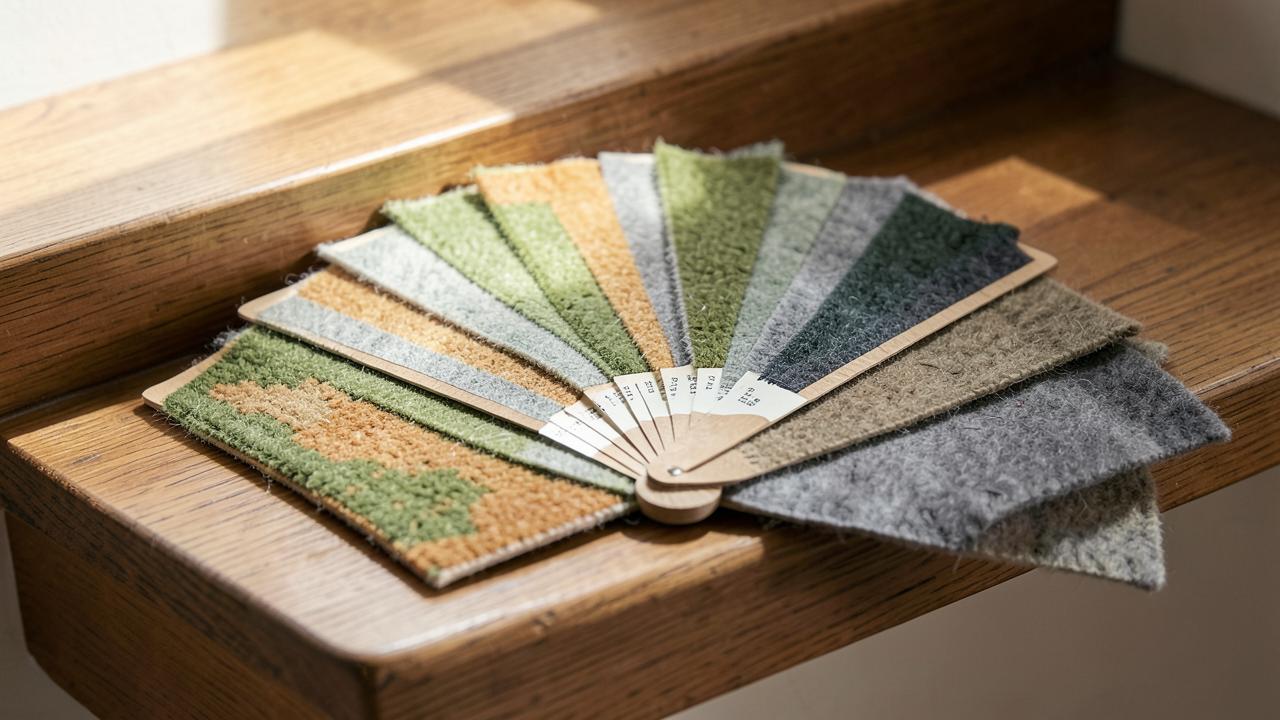
Cheetah vs. Leopard: The Designer's Distinction
In the world of interior textiles, 'animal print' is often used as a catch-all term, but the distinction between cheetah and leopard is significant. A cheetah print consists of distinct, solid black spots. They are usually roughly circular and distributed with a sense of rhythmic spacing. Leopard print, by contrast, features rosettes—jagged black circles with a brown or tan centre.
Why does this matter for your stairs? The cheetah motif is visually 'cleaner'. Because there are fewer colours involved in each individual spot, the pattern feels more graphic and less busy. For a homeowner who wants the excitement of an animal print without the heavy, traditional weight of a leopard rosette, cheetah is the ideal compromise. It feels more energetic and 'fast', much like the animal itself, which makes it particularly effective in transitional spaces like staircases where there is constant motion.
From a distance, a small-scale cheetah print can almost read as a textured solid or a large-scale 'salt and pepper' design. This makes it incredibly versatile. It doesn't scream 'jungle' as loudly as other prints, allowing it to sit comfortably in a classic London townhouse or a modern suburban semi-detached home.
| Feature | Cheetah Print | Leopard Print |
|---|---|---|
| Motif Complexity | Solid, single-tone spots | Multi-tone rosettes |
| Visual Weight | Light, graphic, modern | Heavy, textured, traditional |
| Primary Tones | Usually two (e.g., Black/Tan) | Usually three (Black/Brown/Tan) |
| Pattern Rhythm | High; uniform distribution | Varied; organic clusters |
Selecting the Spot Scale for Your Flight
The 'scale' of a cheetah print—the size of the spots and the distance between them—is the single most important decision you will make. Because the spots are solid, a large-scale cheetah print can feel very 'pop art' and bold. On a standard staircase, oversized cheetah spots can feel a bit overwhelming, as the eye struggles to find a resting place.
Mid-to-small scale prints are generally the most successful for stair runners. A spot that is roughly 1cm to 2cm in diameter provides enough detail to be interesting up close, but blends into a sophisticated texture when viewed from the bottom of the flight. This 'blending' effect is what makes cheetah print so successful at hiding the inevitable dust and lint that accumulates on stairs.
Consider the width of your runner. If you are opting for a narrow runner that leaves significant amounts of wood exposed on either side, a smaller scale print helps the runner feel 'contained' and intentional. If you are going for a wider installation that covers most of the tread, you can afford to go slightly larger with the scale.
Styling the Cheetah Runner
Cheetah print is often called the 'neutral of the animal world'. Because it is usually a simple two-tone pattern, it pairs beautifully with a wide range of styles.
The Sophisticated Neutral
For a timeless look, pair a tan-and-black cheetah runner with off-white walls and black metal handrails. The black of the handrail picks up the black of the spots, creating a cohesive visual thread. Add a few pieces of black-framed artwork on the stairwell walls to complete the look.
The Glamorous Hallway
Cheetah print has a long association with Hollywood Regency and high-glamour interiors. To lean into this, consider adding brass stair rods. The gold tones of the brass complement the tan base of the cheetah print, adding a layer of metallic warmth. For more on this, see stair runner rods.
The Modern Pop
If your home is modern, you might consider a non-traditional cheetah print. Many manufacturers now offer cheetah spots on grey, blue, or even pink backgrounds. A grey cheetah runner is an incredibly practical and stylish choice for a contemporary home, offering all the benefits of the pattern without the traditional warm tones.
Practical Benefits: Durability and Wear
Stairs are the highest-traffic area in any home. The pressure per square inch on the nosing of a step is significantly higher than on a flat floor. Over time, all carpets suffer from 'pile crushing', where the fibres are flattened by footfall.
Cheetah print is a master of disguise when it comes to pile crushing. Because the spots are solid and randomly (but rhythmically) placed, the shadows created by flattened fibres are hidden by the dark spots of the pattern. A plain beige carpet will show a 'shadow' in the traffic lane within months; a cheetah runner can look new for years.
Additionally, cheetah print is excellent for pet owners. If you have a dog or cat, their hair will inevitably end up on the stairs. The multi-tonal, broken nature of the cheetah pattern hides pet hair much better than a solid black or solid tan carpet ever could. For more pet-specific advice, see stair runners for dogs.
Fibre Choices for Cheetah Patterns
Wool: A high-quality wool cheetah runner is a beautiful investment. Wool takes dye exceptionally well, giving the black spots a rich, 'inky' depth. Wool also has natural 'bounce-back' properties, meaning the pile is less likely to flatten. However, wool is a natural fibre and can be sensitive to aggressive cleaning chemicals.
Solution-Dyed Nylon: This is arguably the most practical choice for a busy family home. In solution-dyed nylon, the colour is part of the fibre itself. This means you can clean the runner with more vigorous agents (always check the manufacturer's instructions) without worrying about the black spots fading or 'bleeding' into the tan background.
Polyester/Polypropylene: These are great budget-friendly options. They are highly stain-resistant and often have a soft, silky feel. However, they lack the resilience of wool or nylon, so they are best suited to households with lighter traffic. Compare different materials in our wool vs synthetic guide.
Installation and Alignment
Installing a cheetah print runner is generally easier than installing a zebra or striped runner because the pattern is less linear. However, it still requires a professional touch.
- Centering: The runner must be perfectly centred on each step. Even though the spots are irregular, the eye will notice if the overall 'mass' of the pattern is shifted to one side.
- The Nosing Wrap: The most wear occurs at the nosing. Ensure your installer uses a high-quality gripper and perhaps even a bit of latex adhesive at the nosing to prevent the carpet from shifting. This ensures the pattern stays sharp and doesn't become distorted.
- Winder Steps: On stairs that turn, the runner is often cut and mitred. A skilled installer will try to match the 'density' of the spots across the seam so that the join is virtually invisible. Read more about this in winder stair runners.
Maintenance: Keeping the Spots Sharp
To keep your cheetah runner looking its best, follow these maintenance steps:
- High-Frequency Vacuuming: Vacuum the stairs at least three times a week. Removing the grit before it can settle and grind into the fibres is the best way to prevent the spots from looking 'blurry' over time.
- Use the Right Tool: Use a handheld vacuum or a stair attachment with a rotating brush bar. This lifts the pile and ensures the pattern remains crisp.
- Immediate Spot Treatment: If you spill something, blot it immediately. The solid black spots can sometimes hide a stain, but if left untreated, the stain can attract more dirt and become a permanent dark patch. See cleaning and maintenance for more details.
Choosing the Right Border
A cheetah runner can be finished in two ways: with a 'self-border' (where the pattern goes to the edge) or with a contrasting binding.
No Border: This looks modern and allows the pattern to feel expansive. It is a great choice for wider staircases where you want the runner to feel like an integral part of the architecture.
Contrasting Binding: A black cotton or leather-effect binding is a classic choice for cheetah runners. It 'frames' the pattern, giving it a more formal and finished look. It also helps to visually define the edges of the stairs, which can be a helpful safety feature. You can learn more about finishing options in stair runner width and finishing.
The Emotional Impact of Cheetah Print
Interiors are not just about function; they are about how a space makes you feel. A cheetah print runner adds a sense of playfulness and confidence to a home. It suggests a homeowner who is not afraid to take risks but who also values practicality. It turns a boring, functional part of the house into a source of daily joy. Every time you walk up those stairs, the rhythmic pattern provides a subtle visual lift.
Final Technical Check Before Buying
Before you commit to a cheetah print runner, ask your supplier for the following:
- The Pattern Repeat: How often does the design start over? This will help your installer calculate how much extra carpet you need.
- The Togg Test: If you have underfloor heating on your landings, check the TOG rating of the runner and underlay combination to ensure it doesn't block the heat.
- Lightfastness Rating: If your stairs are in direct sunlight, ensure the black spots have a high lightfastness rating to prevent fading.
Cheetah Print and Safety
While animal prints are generally safer than plain carpets (because they provide more visual information about the depth of the step), you should still ensure the runner is installed securely. A loose runner is a trip hazard. Use high-quality grippers and consider a non-slip underlay if you are installing on very smooth, polished wooden steps. For more on this, visit non-slip stair runner advice.
In summary, the cheetah print stair runner is a triumph of form and function. It offers a unique visual rhythm, unparalleled soil-hiding capabilities, and a timeless style that works across many different home types. Whether you choose the traditional tan or a modern grey, it is a choice that will reward you for years to come.
We have covered many of the technical aspects of choosing and installing, but if you are still feeling uncertain about the process, consult our how to choose a stair runner guide for a holistic view of the project, including measuring and material selection, or browse our general stair runner ideas to compare this bold print with other classic choices like stripes, herringbones, and plain solids that might fit your home’s architecture.
Frequently asked questions
- What is the difference between cheetah and leopard print on a runner?
- Cheetah print consists of simple, solid black spots on a tan ground, whereas leopard print features more complex 'rosettes' (spots with a lighter centre). Cheetah print tends to look more uniform and modern, while leopard is more textured and traditional.
- Is cheetah print practical for a busy hallway?
- Extremely. Like most animal prints, the 'broken' nature of the cheetah pattern is excellent at masking surface dirt, lint, and the flattening of fibres in the traffic lane.
- Does cheetah print make stairs look narrower?
- Usually the opposite. Small, dense spots create a sense of movement that can make a space feel more dynamic and open, though the border choice (or lack thereof) will have the biggest impact on perceived width.
- What fibre is best for a cheetah print?
- A high-twist wool or a dense nylon works best. Because cheetah print relies on crisp, distinct spots, you want a fibre that doesn't 'bloom' or blur too much under foot traffic.
- Can I use cheetah print with other patterns?
- Yes, cheetah print is often treated as a 'neutral'. It pairs well with stripes or large-scale florals, provided you maintain a consistent colour palette across the space.
Related guides
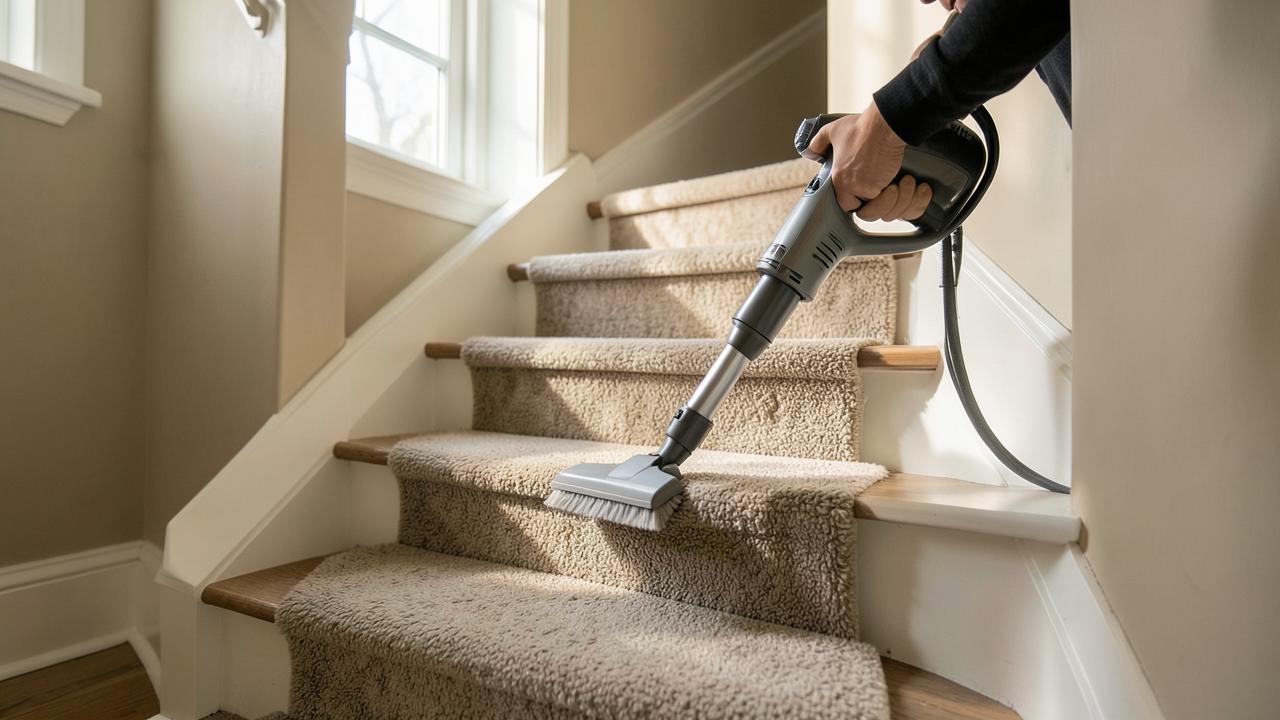 CareCleaning and Caring for a Stair RunnerRoutine vacuuming, spill response by fibre type, slipping and fraying, and when to call a professional.
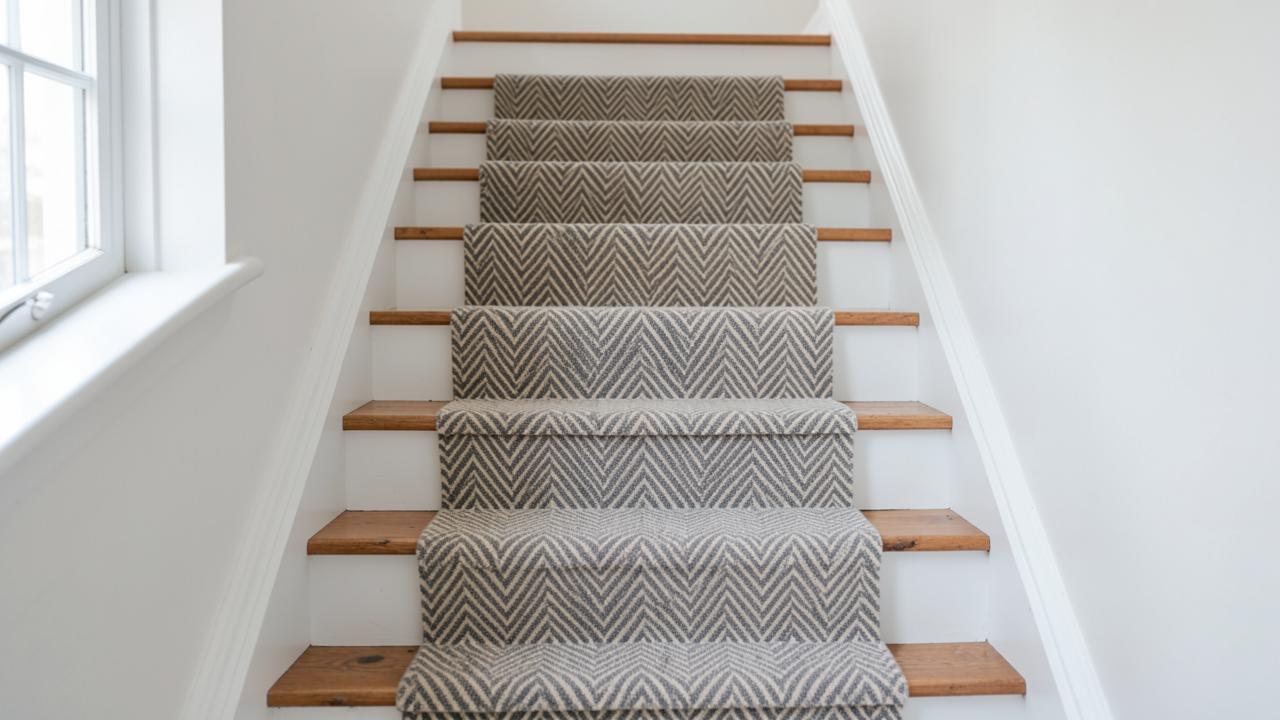 DesignStair Runner Patterns ExplainedHerringbone, chevron, stripes, plaid, geometrics and animal prints judged by how they behave on a staircase.
- DesignLeopard Print Stair Runner Styling & SelectionHow to select and install a leopard print stair runner. We cover pattern scale, matching at the seams, hiding traffic wear, and balancing bold print with your hallway decor.