Materials & durability
What actually makes a stair runner durable
Durability on a staircase comes down to a small number of specific factors — density, fibre, backing and fitting — rather than any single fibre type or price bracket. Here is what to check before you buy.
Written by the StairRunner.co editorial team · Updated 4 September 2026
Why stairs wear carpet faster than any other room
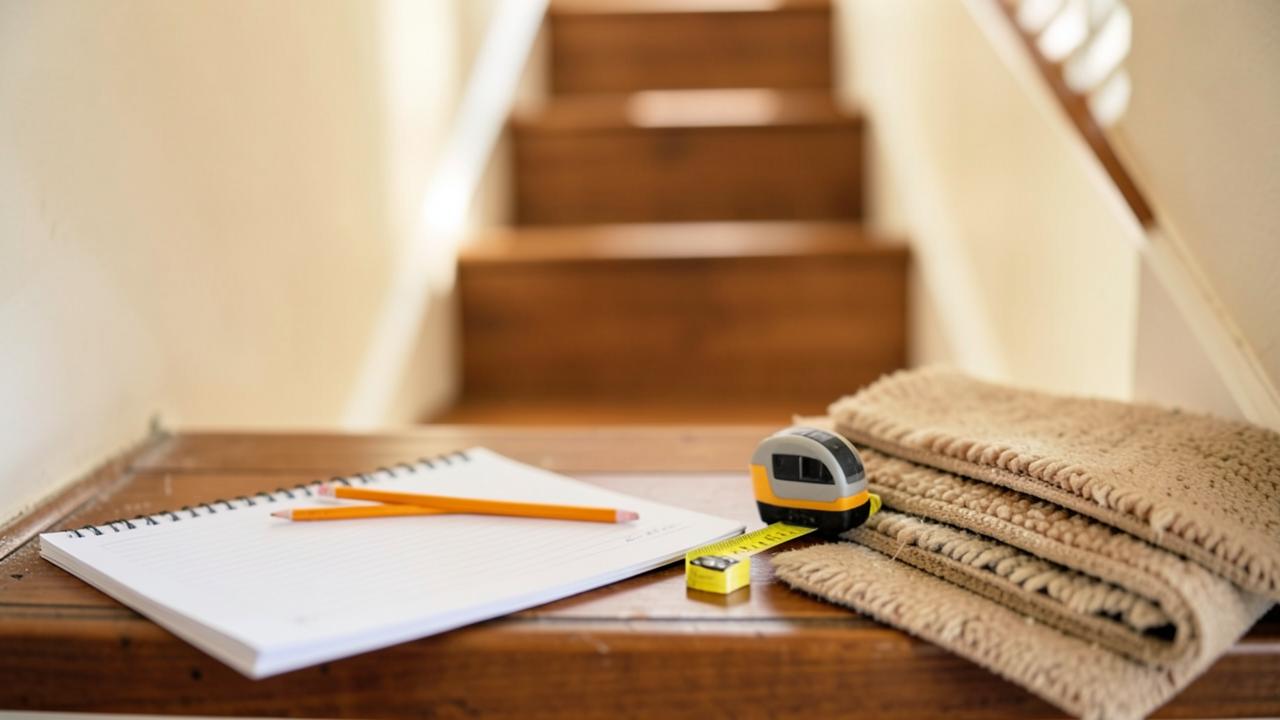
A staircase subjects carpet to a combination of stresses that flat flooring simply does not experience. Every footstep lands with concentrated force on the nosing of the tread, the carpet is bent sharply around that nosing at an angle rather than lying flat, and the same handful of steps in the middle of a flight take the bulk of the household's daily traffic, since everyone uses the stairs multiple times a day. Combined with the in the pile flexing back and forth at that nosing every time someone descends, this produces wear patterns that a lounge or bedroom carpet, laid flat and walked across more evenly, never has to withstand. This is why a carpet that performs perfectly well elsewhere in a house can wear out surprisingly quickly if moved to a staircase without a durability check first.
Pile density: the specification that matters most
Density describes how tightly individual tufts or loops of pile are packed into the backing. A dense pile holds its shape under repeated compression because each fibre has less room to bend or crush before it meets its neighbours, while a sparse pile flattens and mats more quickly because the fibres have nothing supporting them from the side. You can get a rough sense of density by parting the pile with your fingers and looking at how much backing is visible between tufts — a small amount visible suggests a denser construction, while a wide gap suggests a sparser one. Ask your supplier for the actual weight or density specification rather than relying on this alone, since it is a useful sanity check rather than a precise measurement.
Pile height and why lower is often more durable
A shorter, tighter pile generally holds up to stair traffic better than a long, deep one, because a long pile has more fibre length to bend, crush and shed at the point where it wraps the nosing. This does not mean a deep pile cannot be used on stairs at all, but it does mean it needs to be paired with a genuinely dense construction to compensate, and it will typically show wear and a change in texture sooner than a shorter, tightly constructed equivalent. See cut pile stair runners and loop pile stair runners for how the two main pile styles differ in wear behaviour specifically.
Fibre choice and durability
| Fibre | Durability characteristics |
|---|---|
| Wool | Resists crushing well, recovers its pile shape after compression, hides soiling; needs a good pest and stain treatment for peace of mind |
| Wool-blend | Adds synthetic fibre strength and stain resistance to wool's natural resilience and appearance |
| Nylon | Very strong and resilient, often engineered specifically for heavy wear ratings; can be treated for good stain resistance |
| Polypropylene | Naturally stain resistant and often solution dyed for colourfastness, but generally less resilient under crushing than wool or nylon |
| Sisal and natural fibres | Very hard-wearing underfoot but can be less forgiving on bare feet and less resistant to spills unless treated |
For a fuller comparison of natural and synthetic options, see wool vs synthetic stair runners and our general stair runner materials guide.
Construction: woven versus tufted durability
Woven constructions, such as Axminster and Wilton, interlace the pile through the backing during manufacture, which tends to produce an inherently stable, long-wearing structure at a given price point. Tufted constructions insert pile into a pre-made backing and bond it with adhesive, which can be equally durable when the density and backing quality are good, but the range of quality within tufted products is much wider, so it is worth scrutinising the specification more closely rather than assuming construction type alone decides the outcome. Our tufted stair runner guide and woven stair runner guide go into both constructions in more depth.
Backing quality and why it is easy to overlook
The backing is what holds the pile in place and gives the carpet its dimensional stability as it is stretched and fixed over every nosing down a flight. A thin primary backing with a light adhesive application can allow tufts to loosen over time, particularly at the point of greatest flex, while a proper secondary backing spreads that stress and helps the runner keep its shape for years rather than months. This detail is rarely obvious from a small sample swatch, so ask specifically whether a secondary backing is included and what it is made from before ordering.
How fitting quality changes durability outcomes
Even the most durable carpet can be undermined by poor fitting. Under-tensioning leaves slack that allows the pile to shift and crush unevenly, while a stair pad that is too soft or mismatched to the carpet lets the backing flex more than it should at each nosing. Fixings that are too widely spaced or unsuited to the backing type can also let a runner work loose well before the pile itself is worn out. An experienced fitter who tensions correctly, chooses an appropriate pad, and fixes securely at the correct points down the flight is as important to long-term durability as the carpet specification itself. See stair runner installation and choosing stair runner underlay for what a properly specified fitting looks like.
Where wear shows first, and what that tells you
On almost every staircase, the nosing of each tread and the centre few steps of the flight show wear before anywhere else, because that is where the sharpest flexing and heaviest traffic concentrate. If a runner begins to look flattened, dull or thin specifically at these points while the rest of the carpet still looks fresh, that is a sign of the construction rather than of unusually heavy overall use, and it is useful information if you are choosing a replacement, since it points directly at density and backing as the specifications to prioritise next time.
Household factors that affect how long a runner lasts
- Number of daily users and pets, since every additional person or animal using the stairs multiple times a day accelerates wear at the concentrated traffic points.
- Footwear habits, as outdoor shoes worn on stairs bring in more grit than bare feet or socks, and grit is abrasive to pile fibres.
- Cleaning routine, since regular vacuuming removes the grit that accelerates fibre wear before it has a chance to do damage.
- Sunlight exposure, as a staircase near an uncovered window can fade and weaken fibres over time in a way an equivalent shaded staircase will not.
Durability for households with dogs
Pet claws and repeated paw traffic add a specific kind of abrasive wear that differs from human footfall, and households with dogs in particular often benefit from prioritising a dense, tightly constructed pile with good stain and soiling resistance over a soft, deep one that shows scuffing more readily. See choosing a stair runner for dogs for specification advice geared to that situation.
Maintenance that extends durability
No specification, however good, removes the need for basic maintenance. Regular vacuuming, prompt attention to spills before they penetrate the backing, and periodic professional cleaning all extend the working life of any stair runner, and are especially worthwhile on a durable, well-specified product since they protect what is already a good investment. A full routine is set out in our stair runner maintenance schedule and stair runner cleaning guide.
Signs a runner is approaching the end of its useful life
A durable runner still eventually reaches the point where replacement makes more sense than continued repair. Watch for pile that no longer springs back after being pressed flat, visible backing showing through at the nosing of well-used steps, fraying or fuzzing along cut edges, and a change in colour or texture at the centre of the flight compared with the edges. Any one of these on its own may simply be cosmetic, but two or more appearing together, particularly combined with the runner beginning to lift or loosen at its fixings, usually signals it is worth planning a replacement before the carpet becomes a trip hazard rather than only a cosmetic issue.
Balancing durability against budget
It is rarely necessary to buy the most expensive product available to get good durability; it is more useful to identify the minimum density and backing specification that suits your household's traffic level, then compare products against that benchmark rather than against price alone. A moderate-traffic household with no pets and mostly sock or bare feet on the stairs can reasonably choose a lighter specification than a busy family home with dogs and several daily users, and matching the specification to the actual use case is a more reliable route to good value than assuming higher price guarantees a longer working life. Our budget stair runner guide and best carpet for a stair runner cover how to make that comparison in more detail.
Frequently asked questions
- What is the single biggest factor in stair runner durability?
- Pile density matters more than any other single specification. A dense, tightly packed pile resists crushing and matting far better than a sparse one, regardless of fibre type, price point or construction method. Density is not always obvious from a photograph, so ask for it directly.
- Is wool or synthetic more durable on stairs?
- Both can be highly durable if well specified. Wool resists crushing and hides soiling well but can be more vulnerable to certain stains; synthetic fibres such as nylon are often more stain resistant and can be engineered for very high wear ratings. The specific product's density and construction matter more than the fibre family alone.
- Does a more expensive stair runner always last longer?
- Generally price correlates with quality within a fibre and construction type, but not always across categories. A well-specified mid-range tufted runner with good density and backing can outlast a poorly chosen but pricier product. Check the specification rather than relying on price as a proxy.
- How much does fitting affect how long a runner lasts?
- Considerably. Even a dense, well-made runner will wear unevenly, ripple or work loose if it is fitted with poor tensioning, the wrong pad, or fixings unsuited to the backing. Durability is a product of the carpet and the installation together, not the carpet alone.
- Which part of a staircase wears out first?
- The nosing of each tread, where feet land and the carpet is bent sharply over the front edge, wears fastest, followed by the centre of the flight where most foot traffic concentrates. This is why density and backing quality at the point of greatest flex matter so much.
- Can underlay improve durability?
- Yes. A good stair pad absorbs impact and reduces the flexing the carpet backing experiences at each nosing, which slows wear. A pad that is too soft or too thick can undermine tensioning and actually shorten a runner's working life, so match the pad to the carpet rather than choosing the thickest available.
- How long should a durable stair runner realistically last?
- A well-specified, well-fitted runner in an average domestic household can remain in good condition for many years, while a thin, sparse product on a busy family staircase may show visible wear within a much shorter time. The range is wide because specification, traffic levels and maintenance all vary so much between households.
Related guides
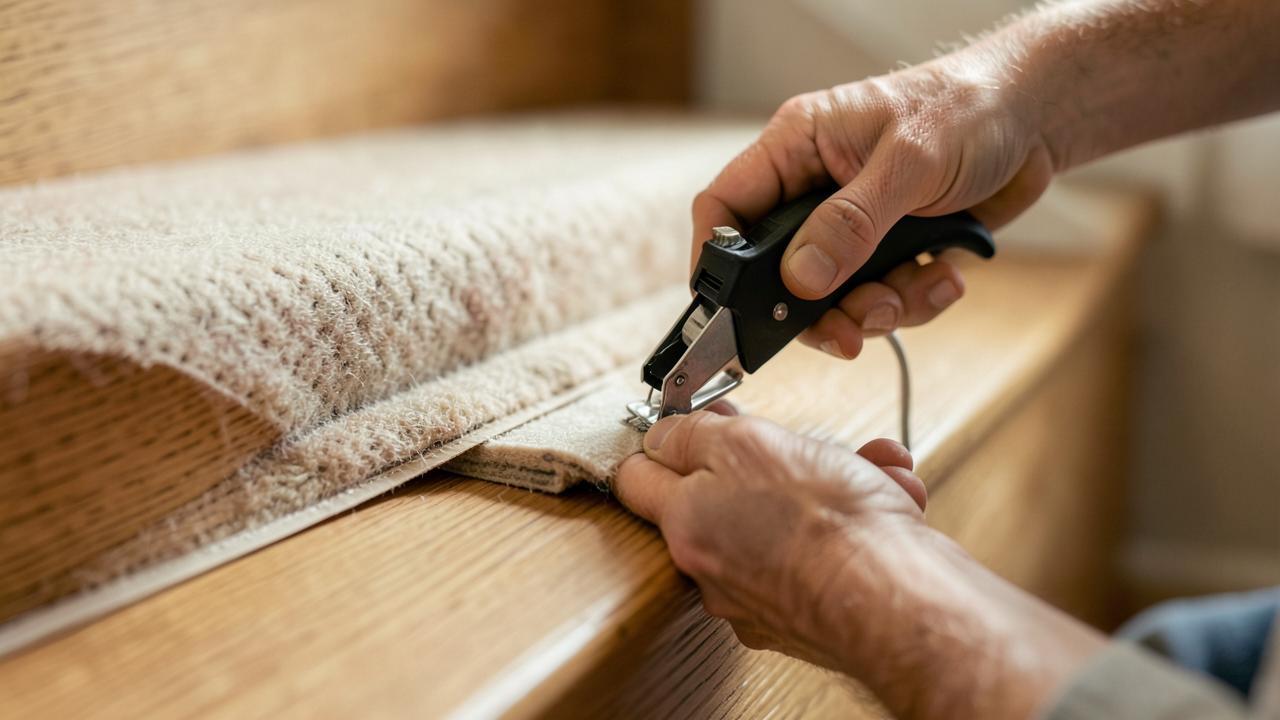 InstallationHow to Install a Stair RunnerWaterfall and Hollywood methods, staples versus rods, tools, sequence and quality checks.
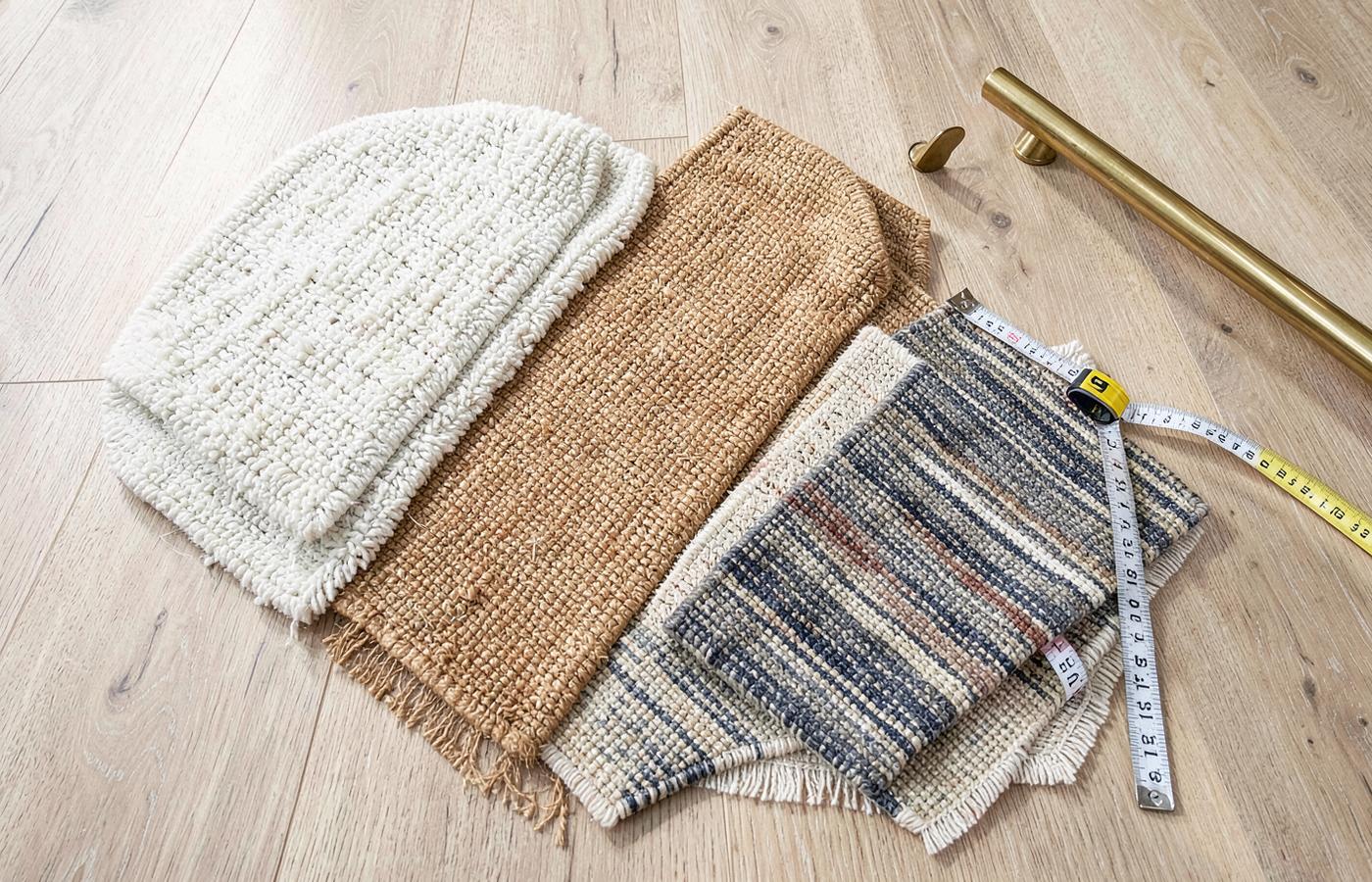 MaterialsStair Runner Materials ComparedWool, nylon, polypropylene, sisal and jute judged on stair-specific wear, comfort, cleaning and safety.
- ComparisonsWool vs Synthetic Stair RunnersWool, nylon, polyester and polypropylene compared on stair-specific wear, cleaning, comfort and price.
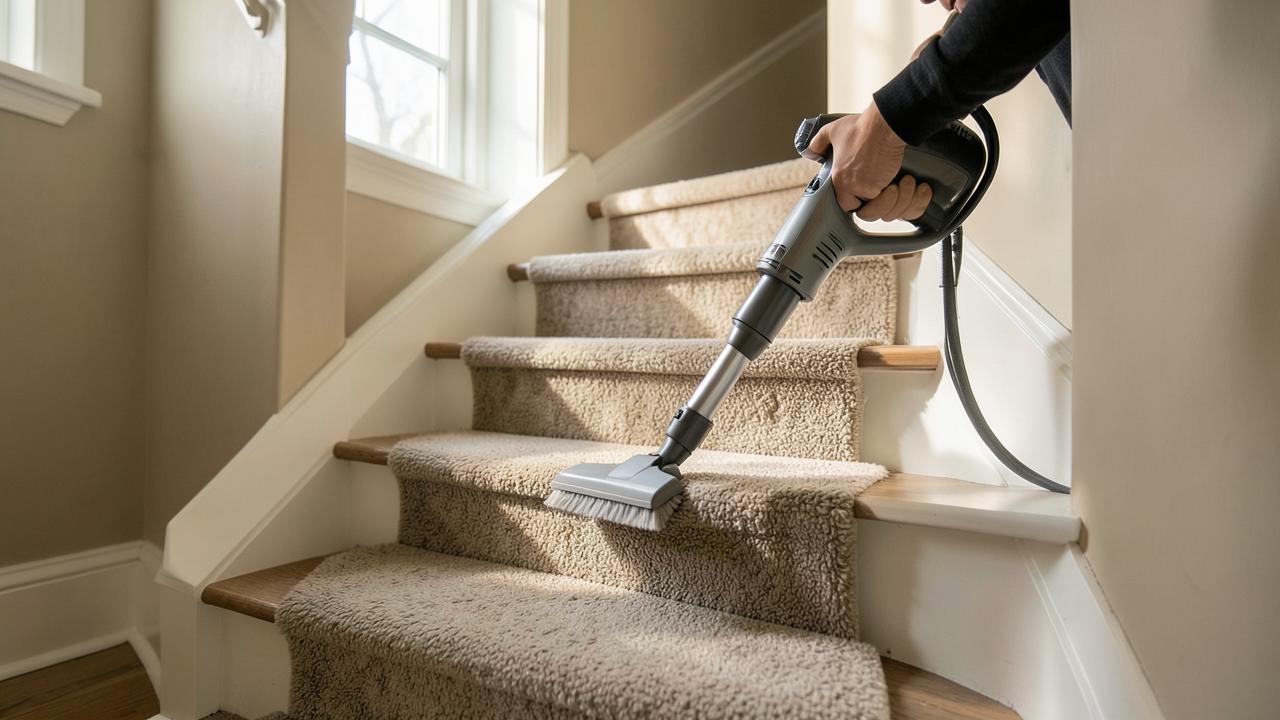 CareStair Runner Maintenance: Your Care ScheduleKeep your runner looking fresh with our expert maintenance schedule. From weekly vacuuming to annual professional cleaning.
- MaterialsTufted Stair RunnersHow tufted stair runners are made, how they compare with woven constructions, and what to check for density, backing and durability before buying.