Style
Floral stair runners: a buying guide
A well-chosen floral runner brings warmth and character to a staircase in a way few other patterns can, but scale, colour depth and construction all need to be right for it to work.
Written by the StairRunner.co editorial team · Updated 4 September 2026
Why floral patterns have endured on stairs
Floral carpet has a longer history on staircases than almost any other pattern family, and it has stayed popular for reasons that go beyond nostalgia. A well-designed floral repeat, particularly one with some shading and depth rather than a flat, cartoonish outline, does an excellent job of disguising the everyday marks a stair collects: dust, light footprints, the occasional dropped crumb. It also softens a staircase that might otherwise feel quite hard and architectural, especially where the surrounding hallway has painted spindles, plain walls and timber treads either side of the runner. For a wider look at how pattern generally functions on stairs, see stair runner patterns.
Choosing the right scale for your staircase
Floral designs range from tiny, densely packed sprig patterns to bold, large-scale blooms intended to be seen from across a room. On a staircase, where the runner is confined to a narrow strip and is viewed from close range as you climb, scale needs careful thought. A large floral designed for a wide reception room floor can look truncated and awkward once cut down to a runner's width, with individual blooms cropped at the edges rather than sitting comfortably within the pattern. A smaller, denser repeat, sometimes called a sprig or trail pattern, tends to translate far more successfully onto a narrow flight, because the motif is small enough to complete itself within the runner's width rather than being interrupted by its edges.
| Stair or hallway style | Suggested floral scale | Why |
|---|---|---|
| Narrow Victorian or Edwardian flight | Small sprig or trail pattern | Completes within the runner's width without cropping |
| Standard modern staircase | Medium-scale, tonal floral | Reads clearly without overwhelming a simpler hallway |
| Wide, grand or country house stair | Larger, layered floral | Fills the extra width and suits a more traditional setting |
| Contemporary interior wanting subtle pattern | Small-scale, low-contrast floral | Adds interest without reading as overtly traditional |
Colour depth and how it affects everyday practicality
The most successful floral runners for a hard-working staircase tend to use a multi-tonal palette rather than one dominant background colour with a single contrasting bloom colour. A background built from two or three closely related tones, with the floral motif picked out in complementary shades, hides the gradual build-up of dust and light soiling between cleans far better than a flat pale background with a single bold flower colour standing out sharply against it. If you are choosing primarily for a busy family hallway, lean towards a design with more tonal variation rather than one built around a single strong contrast, however attractive that contrast looks in a showroom. For broader guidance on colour choices, see stair runner colours.
Woven versus printed floral designs
Floral patterns are produced in two fundamentally different ways, and the difference matters more on a staircase than almost anywhere else in the home because of the concentrated foot traffic a runner receives. A woven floral, typically produced as an Axminster or Wilton construction, builds the colour into the pile itself during manufacture, so the pattern does not wear away even as the pile is compressed by years of use. A printed floral applies colour to the surface of a plain woven or tufted base after construction, which can look just as attractive when new but is more prone to gradually fading or thinning in the traffic lane, particularly on the nosing of each tread where wear concentrates. Ask your supplier which method has been used, and weigh this against your budget and expected years of use. Our wider guide to choosing the best carpet for a stair runner covers fibre choice in more detail.
Floral runners in period properties
Georgian, Victorian and Edwardian houses are where floral stair runners feel most instinctively at home, particularly where other period details, such as ceiling roses, panelled doors or an original balustrade, are still present. A traditional floral in muted, historically plausible colours, such as faded reds, ochres and deep greens, tends to suit these interiors better than a bright, contemporary floral palette, even if the underlying motif is quite similar. If you are renovating a period property and want the staircase to feel authentic to its age rather than simply decorative, it is worth researching the kinds of colourways and motifs that were typical of the property's original era before choosing a specific design.
Floral runners in contemporary interiors
Pattern does not need to be confined to period houses, and a restrained floral can work well in a more modern setting provided it is chosen with some discipline. A small-scale, low-contrast floral in soft neutral tones, sometimes described as a tonal or watercolour floral, can add gentle texture and warmth to a contemporary hallway without looking out of place among plainer, more architectural furnishings. The key in a modern setting is restraint: a single, quietly patterned runner works far better than combining it with other strongly patterned soft furnishings nearby, which can make a hallway feel busy rather than considered.
Fitting considerations: turns, winders and pattern repeats
As with any repeating pattern, a floral design cannot wrap seamlessly around a turn or a set of winder treads. The motif will need to break, rotate slightly or restart at some point in the turn, and a good fitter will plan this so the break falls at the least visible point of the flight, rather than directly at eye level from the hallway below. Establish the pattern repeat measurement with your supplier before ordering; this determines how much additional length needs to be allowed so the design can be centred consistently down the flight. See fitting a runner around a winder and calculating stair runner length for more detail on how these measurements are worked out.
Pairing a floral runner with borders and surrounding decor
Many floral runners are finished with a plain or subtly patterned border rather than a second bold pattern, which allows the central floral motif to remain the clear focal point rather than competing with a busy edge detail. Choose a border colour drawn from one of the more muted tones within the floral design itself, rather than from the brightest accent colour, so the finished runner reads as a cohesive whole rather than as two separate patterns stitched together. See bordered stair runners for more on how borders are typically specified.
Floral versus other pattern families
| Pattern style | Character | Best suited to |
|---|---|---|
| Floral | Organic, softer, often traditional | Period properties and warm, layered interiors |
| Geometric | Structured, graphic, repeating | Contemporary and transitional schemes |
| Striped | Directional, linear | Emphasising the length of a flight |
| Animal print | Bold, textural, statement-led | Eclectic or maximalist interiors |
Common mistakes when choosing a floral runner
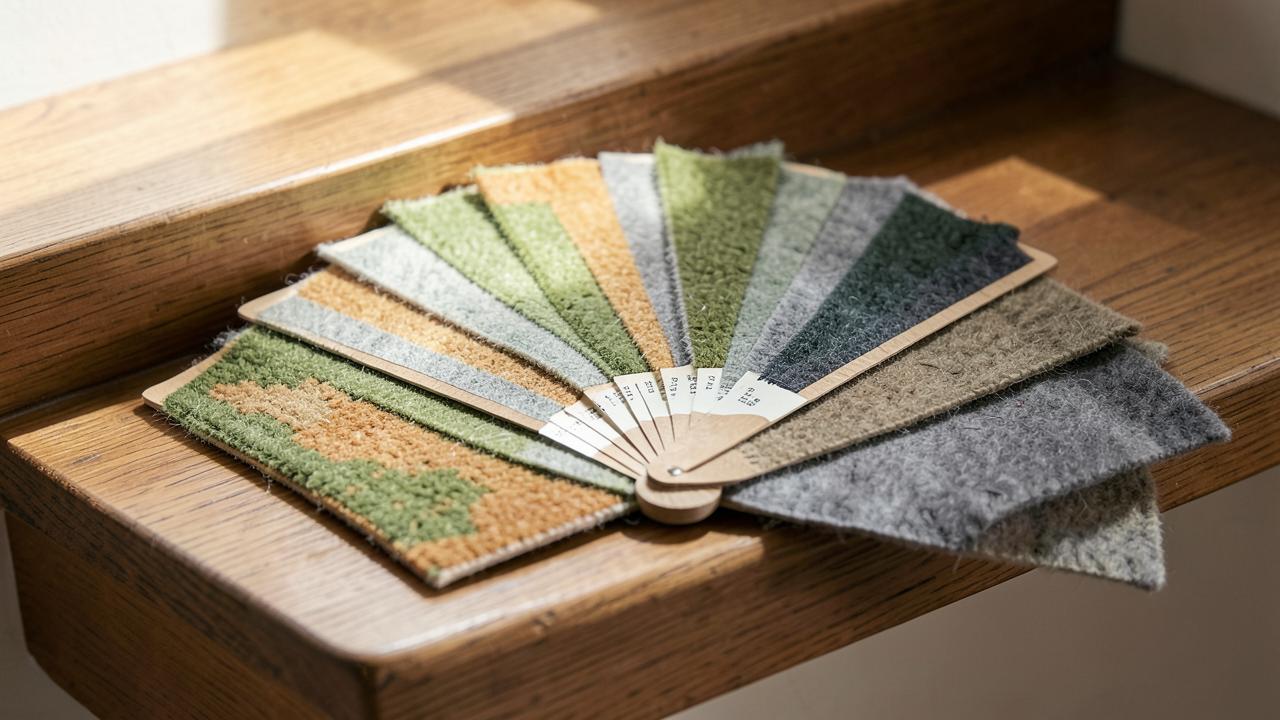
- Choosing scale from a small sample. Always view the pattern folded over an actual tread and riser before committing.
- Matching a fabric too literally. A runner that echoes rather than exactly copies existing furnishings ages more gracefully.
- Overlooking the pattern repeat when ordering. This affects both how much carpet you need and how the design will look at any turn.
- Choosing a printed design for a very high-traffic stair. A woven construction generally holds pattern definition for longer under heavy daily use.
Maintaining a floral runner
The same core maintenance routine applies to a floral runner as to any other stair carpet: regular vacuuming of the traffic lane, prompt blotting of spills, and periodic professional cleaning to lift ground-in soiling that vacuuming alone cannot reach. A well-chosen multi-tonal floral will continue to disguise everyday marks between cleans, but it still needs the same underlying care to keep both the pile and the pattern looking fresh over years of use. See cleaning and caring for a stair runner for fibre-specific advice.
A note on longevity and changing taste
Floral pattern has moved in and out of fashion repeatedly over the decades, but a well-chosen, restrained floral in colours that suit the architecture of the house tends to outlast short-term trends far better than a design chosen purely because it is currently fashionable. If you intend the runner to last many years, prioritise a colourway and scale that suits the proportions and period of your own staircase over one that simply matches a current interiors trend, since the trend will move on while the staircase, and the runner fitted to it, generally will not be replaced for some time.
Combining floral with a runner border in period settings
Grand and period staircases often carried a floral runner with a distinct plain border in a deep, contrasting colour, a treatment that remains effective today. The border gives the eye a clean line to follow up the flight, framing the floral centre rather than letting it spread edge to edge, which can look visually heavier on a narrow stair. This approach also has a practical benefit: a plain border wears differently to the patterned centre and can sometimes be replaced or re-bound at the edges without needing to replace the whole runner, extending its useful life.
Choosing a floral runner for a rental or short-term let
Landlords and short-term let owners sometimes avoid pattern altogether on the assumption that plain carpet is safer, but a well-chosen, hard-wearing floral in a muted, mid-tone palette can actually outperform a plain carpet in a heavily used rental, precisely because it disguises wear and light staining between professional cleans far more effectively. A synthetic floral with a woven rather than printed construction is worth the modest extra cost in this context, since it needs to withstand tenant turnover with minimal ongoing attention.
Final thought: letting the staircase set the tone
A staircase is usually the first thing a visitor sees on entering a home, and a well-judged floral runner sets a tone of warmth and care before anyone has stepped further inside. Take the time to view samples in your own hallway light, at different times of day, since floral colourways in particular can shift noticeably between daylight and artificial lighting in a way that plainer carpets do not.
Frequently asked questions
- Are floral stair runners only suitable for period houses?
- No, though they are especially at home there. A small-scale, tonal floral in muted colours can suit a contemporary hallway too, particularly where the rest of the decor is kept simple enough for the pattern to stand out without competing.
- Will a large floral pattern look too busy on a narrow stair?
- It can. Large-scale florals are designed to be seen across a reasonable distance and can feel cramped when confined to a runner roughly 60 to 90 centimetres wide. A smaller, denser floral repeat generally suits a narrow flight better.
- Do floral runners show dirt more than plain carpets?
- Usually the opposite. A multi-tonal floral repeat, especially one with some depth and shading in the design, disguises everyday soiling and light staining considerably better than a plain solid colour, which is one practical reason pattern has remained popular on stairs.
- Can a floral runner be matched to existing curtains or upholstery?
- It can work well as a coordinating element, but avoid choosing a runner purely to match one fabric exactly. A floral that shares a colour family with your existing furnishings, without being an identical print, tends to look more considered and ages better as other pieces are replaced.
- How does a floral pattern behave around a turn or winders?
- Like any repeating pattern, a floral motif will not wrap a corner without some visible break or shift. Discuss this with your fitter before cutting so the break falls in the least conspicuous position on the turn.
- Is wool or synthetic better for a floral design?
- Both can carry a floral pattern well, but the method matters more than the fibre. A woven floral, where colour is built into the construction, tends to hold its definition longer than a printed floral sitting on the surface of a plain base carpet.
Related guides
 DesignStair Runner Patterns ExplainedHerringbone, chevron, stripes, plaid, geometrics and animal prints judged by how they behave on a staircase.
- DesignChoosing a Stair Runner ColourHow light, adjacent flooring, trim colour, traffic and dirt should drive the colour decision.
- DesignBordered Stair Runners: Design & Fitting GuideA complete guide to bordered stair runners, covering whipped vs taped edges, width ratios, winder mitring, and how to choose the right contrast for your hallway.
- DesignGeometric Stair Runners: A Buying GuideHow to choose a geometric stair runner, from scale and repeat to colour, fibre and fitting, so the pattern reads correctly on real treads and risers.
- DesignTraditional Stair RunnersA comprehensive guide to traditional stair runners. Explore classic patterns, materials like wool and sisal, and how to create a timeless look for your hallway.
- DesignVictorian Stair RunnersA detailed guide to Victorian stair runners. Learn about authentic patterns, historical colour palettes, and how to achieve a formal period look on your staircase.