Style
Geometric stair runners: a buying guide
A repeating geometric pattern can turn a plain staircase into the most confident feature in a hallway, but only if the scale, colour and fitting are all thought through together.
Written by the StairRunner.co editorial team · Updated 4 September 2026
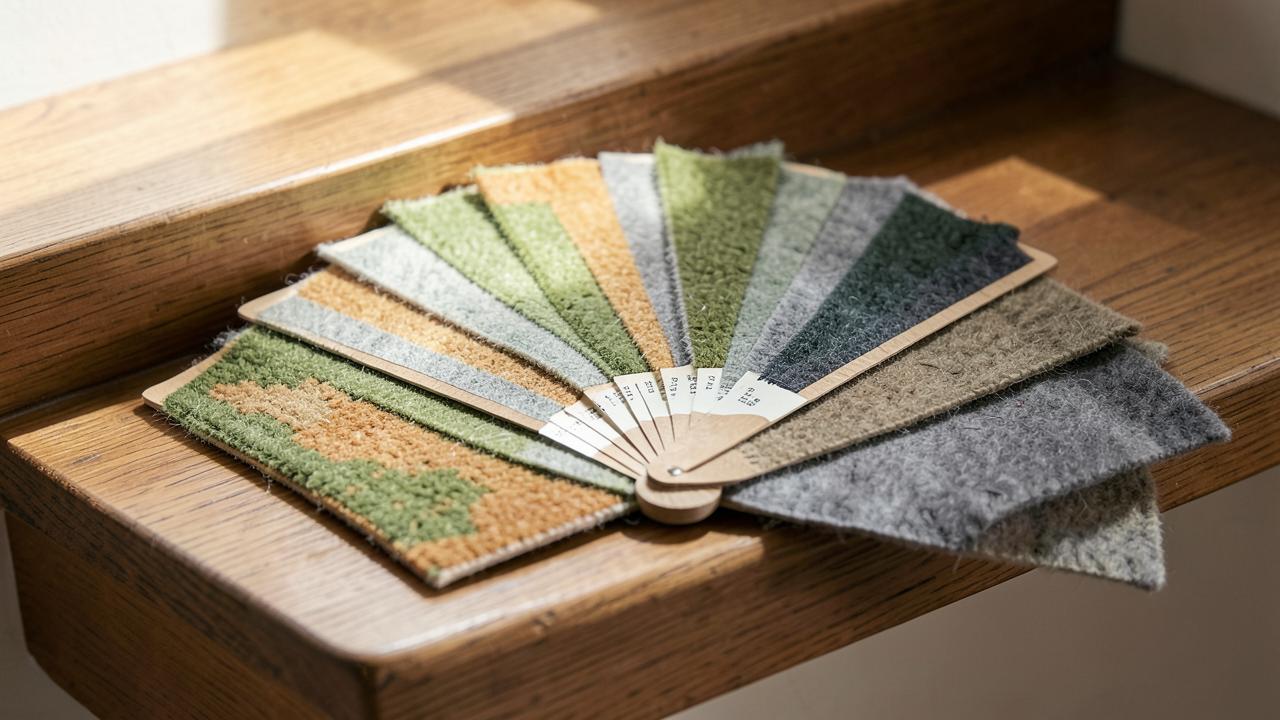
Why geometric patterns work so well on stairs
A staircase is seen from more angles, and at closer range, than almost any other floor in the house. You look down on it from the landing, along it from the hall, and directly at each tread as you climb. A geometric repeat plays to this because its structure holds up under scrutiny from every one of those viewpoints, unlike a large floral or abstract design that can look quite different depending on where you are standing. The repeat also does useful practical work: a busy, structured pattern disguises the everyday dust, grit and light staining that a plain solid colour shows almost immediately, which is one reason pattern has always been popular on the busiest run of carpet in the house. For a broader look at pattern choices generally, see stair runner patterns.
Getting the scale right
Scale is the single most common mistake buyers make with geometric runners. A pattern that looks balanced and appealing on a large sample board or spread across a showroom floor can look entirely different once it is confined to a strip roughly 60 to 90 centimetres wide, running across dozens of individual treads. As a starting principle, a tread that is narrower than average calls for a smaller, tighter repeat; a wide, generous stair can carry a bolder, larger-scale design without it feeling cramped. Ask to see a sample laid across an actual tread and riser rather than judging it flat on a table, because the fold at the nosing changes how the pattern is read and can make a large motif look truncated or oddly cropped.
| Stair characteristic | Suggested pattern scale | Why |
|---|---|---|
| Narrow, steep flight | Small, tight repeat | Keeps the motif legible within a short tread depth |
| Standard domestic width | Medium repeat | Reads clearly from both hall and landing viewpoints |
| Wide, grand staircase | Larger or layered repeat | Fills the extra width without looking sparse or scattered |
| Flight with a turn or winders | Small to medium, non-directional if possible | Minimises visible pattern breaks where the runner turns |
Colour strategy for geometric designs
Geometric patterns are usually built from two, three or occasionally four colours arranged in a repeating structure, and how those colours relate to each other matters more than which individual colours you pick. Tones that sit close together in depth, for example two mid-blues and a cream, tend to feel calm and considered even in a strongly patterned design. A high-contrast pairing, such as a near-black against a bright white, reads as bold and graphic, which suits some hallways very well but can overwhelm a small entrance or a stair that is visible from several rooms at once. Before committing, look at how the runner's dominant tone relates to your walls, skirting and any existing landing carpet, since the stair rarely exists in isolation. For general colour guidance beyond pattern, see stair runner colours.
Fibre and construction considerations
Pattern is created either by weaving different coloured yarns into the construction, as with a woven Axminster or Wilton runner, or by printing a design onto a plain woven or tufted base. Woven patterns tend to hold their definition for longer because the colour runs through the actual structure of the pile, whereas a printed pattern sits on the surface and can fade or wear thin in the traffic lane over time, particularly in a brighter colourway. Neither approach is wrong, but it is worth asking your supplier which method has been used and how it affects the runner's expected life on a stair that sees daily use. If you are still deciding between fibres more generally, our guide to choosing the best carpet for a stair runner covers wool, synthetic and blended options in more depth.
Pattern repeat and how it affects your order
Every geometric design has a repeat measurement: the distance the pattern travels before it starts again. This matters for two practical reasons. First, your supplier needs to know the repeat to calculate how much extra length to allow so the motif can be centred consistently down the flight rather than starting mid-pattern at the top and finishing awkwardly at the bottom. Second, if your staircase has a turn or a set of winders, the repeat affects how visible any break in the pattern will be at that point. Discuss this with your supplier at the quoting stage, not after the carpet has arrived, since it is far easier to plan for a pattern break than to fix one after fitting. Our guide to calculating stair runner length explains the underlying measurement principles that a pattern repeat is added to.
Fitting a geometric runner around turns and winders
A plain or lightly textured runner can turn a corner with barely any visible change, because there is no pattern to interrupt. A geometric repeat cannot do this in the same way: the motif will either break, rotate, or shift slightly as it passes over winder treads, and a good fitter will plan the layout so this happens as unobtrusively as possible, often by centring the break at a less prominent point in the turn rather than at eye level from the hall. This is a case where it genuinely helps to discuss the design with your fitter before the carpet is cut, since decisions made at the cutting stage cannot easily be undone once the runner is on the stairs. See fitting a runner around a winder for more on how turns are handled generally.
Living with a bold pattern day to day
A strong geometric runner tends to divide opinion less than people expect, because it usually reads as confident and intentional rather than busy, provided the rest of the hallway is kept relatively calm. Pair a bold stair pattern with plain walls and simple window treatments in the hall and landing, and let the stairs do the decorative work rather than competing with several other patterned elements in the same sightline. If you are drawn to pattern generally but are nervous about commitment, a smaller-scale, two-tone geometric in colours close to your existing decor is a safer starting point than a large, high-contrast design, and can always be swapped for something bolder at the next replacement cycle.
Geometric versus other pattern families
| Pattern style | Character | Best suited to |
|---|---|---|
| Geometric | Structured, repeating, graphic | Contemporary and transitional interiors wanting confident pattern |
| Floral | Organic, softer motifs | Period properties and traditional decorating schemes |
| Striped | Directional, linear | Emphasising the length of a long flight |
| Plain with texture | Subtle, non-repeating surface interest | Turns and winders where pattern breaks are unwanted |
Common mistakes to avoid
- Choosing scale from a showroom board. Always ask to see the pattern laid across an actual tread and riser before deciding.
- Ignoring the pattern repeat when ordering. An unplanned repeat can leave the motif starting or finishing awkwardly at the top or bottom of the flight.
- Overlooking how a turn will look. Discuss winder treatment with your fitter before cutting, not after.
- Pairing a bold runner with an already busy hallway. Let the stairs carry the pattern and keep surrounding surfaces calmer.
Maintaining a geometric runner
A patterned runner is not inherently easier or harder to maintain than a plain one; the same rules apply. Regular vacuuming in the traffic lane, prompt blotting of spills, and periodic professional cleaning will keep the colours crisp and the pile even. Where pattern does help is in disguising the everyday marks that accumulate between cleans, which is a genuine practical advantage on the busiest stretch of carpet most households own. For fibre-specific cleaning advice, see cleaning and caring for a stair runner.
Where geometric runners suit period properties
It is a common assumption that geometric pattern belongs only in modern interiors, but a restrained, small-scale geometric in muted, historically appropriate tones can suit a Georgian or Victorian hallway just as well as a traditional floral, particularly where the existing architecture already has strong straight lines from panelling, balustrades or tiled flooring. The key is restraint in colour rather than avoiding geometric shapes altogether. A two-tone design echoing the proportions of an existing tiled hall floor can feel entirely at home in a period setting.
Working with a designer or fitter on layout
Because a geometric pattern is unforgiving of small misalignments, it rewards a short planning conversation before any cutting takes place. Ask your fitter to mark out, tread by tread, where the pattern's centre point will fall, particularly if the flight has a half landing or turn partway up. On a long, uninterrupted flight this is usually straightforward, but on a stair with several turns, a bay window half landing, or a mix of straight and winder treads, a small amount of planning at the start avoids a visible misalignment appearing three-quarters of the way up, by which point it is far more disruptive and costly to correct.
How lighting affects a geometric pattern
Stairwells are notoriously difficult to light evenly, with natural light often falling from a single window at a half landing and artificial light coming from one or two fittings along the flight. A geometric pattern with strong contrast will show this unevenness more than a plain runner would, since the eye is drawn to compare the same motif in bright and shadowed sections of the same flight. If your stairwell has uneven lighting, a mid-tone, lower-contrast geometric will read more consistently from top to bottom than a design built around stark black and white, which can look like two different colours depending on which end of the stair you are viewing it from.
Balancing pattern with a runner's border
Many stair runners are finished with a contrasting or complementary border along each long edge, and this detail interacts with a geometric pattern in ways worth considering before you order. A border in a colour already present within the pattern's palette will look intentional and cohesive, effectively framing the design without introducing a fourth competing colour. A border chosen purely to contrast with the surrounding hallway carpet or flooring, without reference to the pattern itself, can end up fighting the geometric repeat rather than complementing it. See bordered stair runners for more on how borders are specified and fitted.
A brief note on maintenance-driven design choices
Households with children, pets, or simply a high volume of foot traffic sometimes choose a geometric pattern specifically because of its practical benefits rather than purely for decorative reasons. A busy, multi-tonal repeat in a mid-depth colourway will disguise everyday soiling, pet hair and minor spotting far more effectively than a plain pale carpet, without requiring a heavily patterned or ornate design. If durability and low-visible-maintenance are the primary drivers behind your choice, look for a smaller, tighter geometric repeat in two closely related tones rather than a large, high-contrast design chosen mainly for visual impact.
Frequently asked questions
- Do geometric stair runners suit narrow staircases?
- Yes, provided the scale of the repeat is kept modest. A small, tightly spaced motif reads clearly on a narrow tread, whereas a large-scale pattern designed for a wide flight can look cramped or get cut awkwardly at the runner's edge.
- Will a geometric pattern hide dirt better than a plain runner?
- Generally, yes. A busy, multi-tonal repeat breaks up the eye's ability to spot individual specks of soiling in the way a flat solid colour cannot. This is one of the practical reasons pattern is so common on stairs, quite apart from its decorative appeal.
- How much extra carpet do I need to allow for pattern matching?
- Ask your supplier for a pattern repeat measurement before ordering. Geometric designs with a clear, regular repeat usually need a modest allowance above the flight's straight-line length so that the motif can be centred and matched consistently at winders and turns.
- Can a geometric runner go around a turn or winders?
- It can, but the pattern will not wrap the corner seamlessly the way a plain or subtly textured runner does. Expect the motif to break or shift slightly at a winder, and discuss this with your fitter before ordering so there are no surprises on the day.
- Is a geometric runner harder to fit than a plain one?
- It takes more care rather than more skill. The fitter has to keep the pattern centred and level tread by tread, which means slightly more time spent checking alignment as the work progresses, particularly on a flight with any turn.
- What colours work best for a geometric stair runner?
- Two or three tones that sit close together in depth tend to age better than a high-contrast pairing, which can dominate a hallway. A repeat built from tones already present in your hall or landing decor will integrate the stairs rather than making them a stand-alone feature.
Related guides
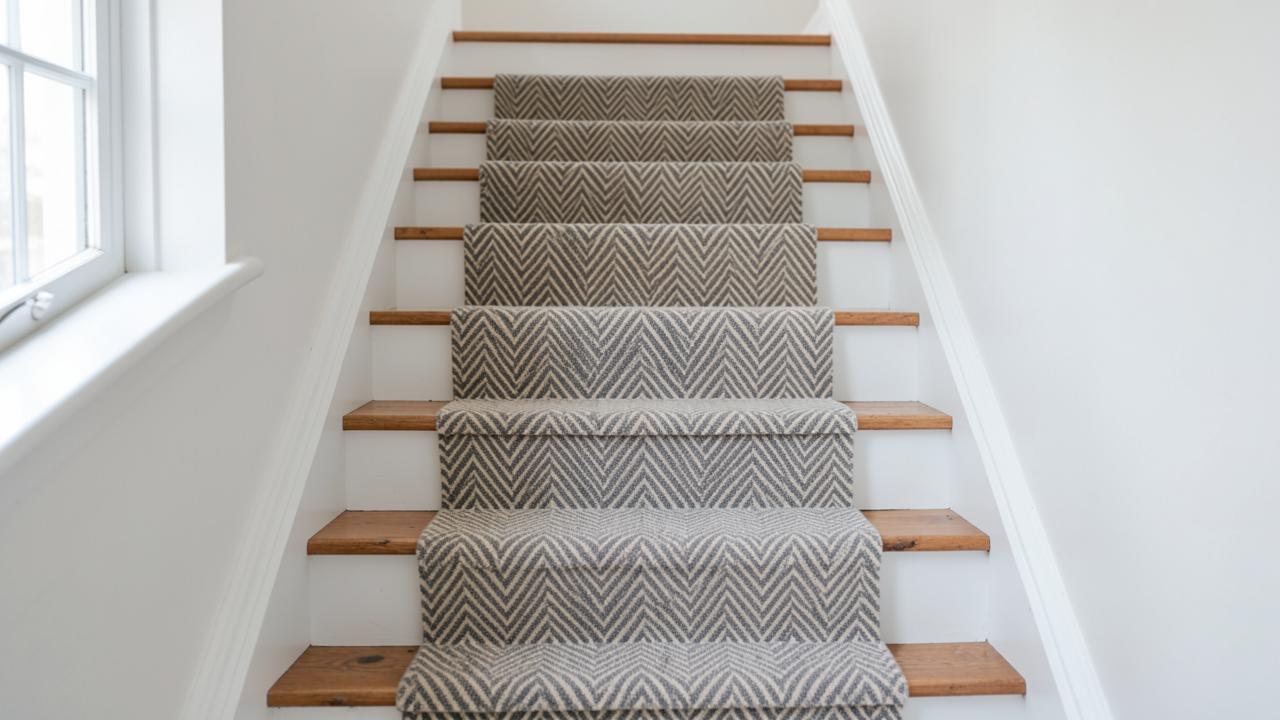 DesignStair Runner Patterns ExplainedHerringbone, chevron, stripes, plaid, geometrics and animal prints judged by how they behave on a staircase.
- DesignChoosing a Stair Runner ColourHow light, adjacent flooring, trim colour, traffic and dirt should drive the colour decision.
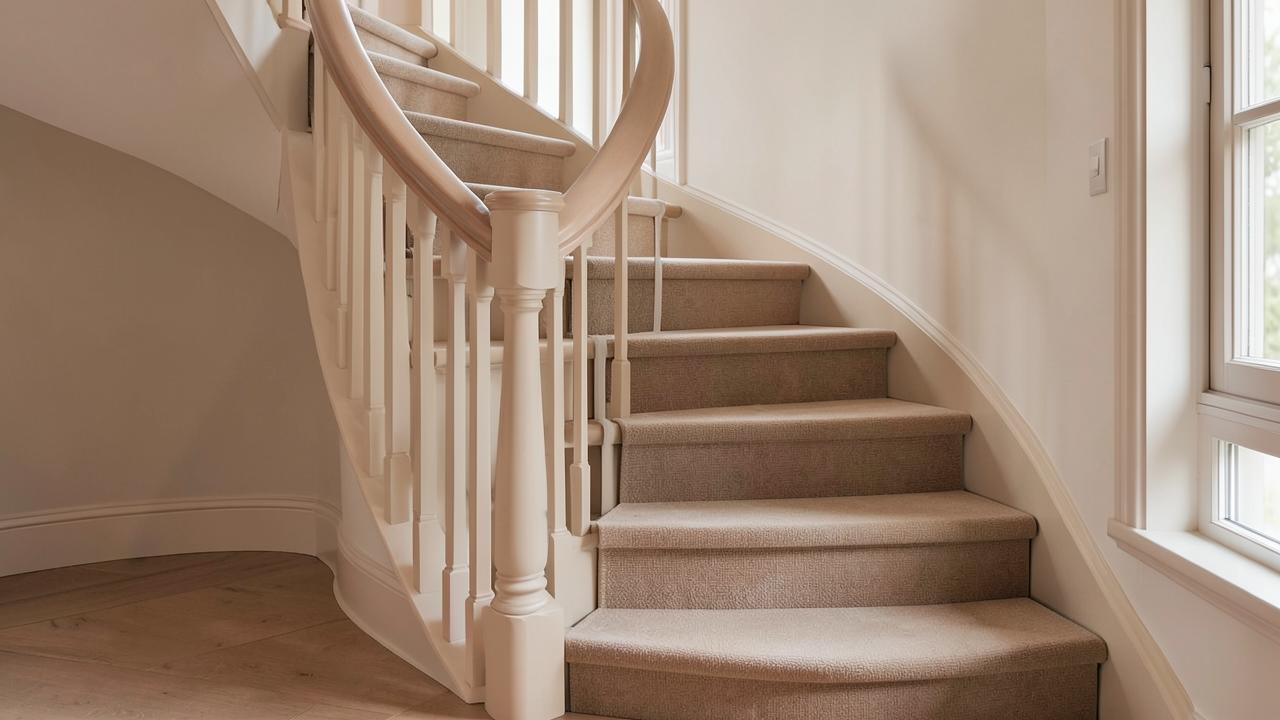 MeasurementRunners on Winder, Curved and Open StairsMeasuring and fitting where treads are not rectangles: winders, pie steps, curves and open-sided flights.
- DesignBold Stair Runner Ideas & Design AdviceHow to use bold patterns, vibrant colours, and maximalist designs on your stairs. Learn about pattern scale, colour psychology, and architectural balance.
- DesignChevron Stair Runner Ideas & Fitting GuideMaster chevron patterns on stairs: how to align points, manage winders, choose scale, and ensure a seamless look from top to bottom.
- DesignFloral Stair Runners: A Buying GuideChoosing a floral stair runner: scale, colour, fibre and how period style, planting motifs and repeat size combine on a real staircase.