Style
Antelope print stair runners
Antelope print is the quietest of the animal prints used on stairs — a fine, speckled texture rather than a bold motif — and one of the most versatile for households wanting pattern's practical benefits without its visual noise.
Written by the StairRunner.co editorial team · Updated 4 September 2026
What sets antelope print apart from other animal prints
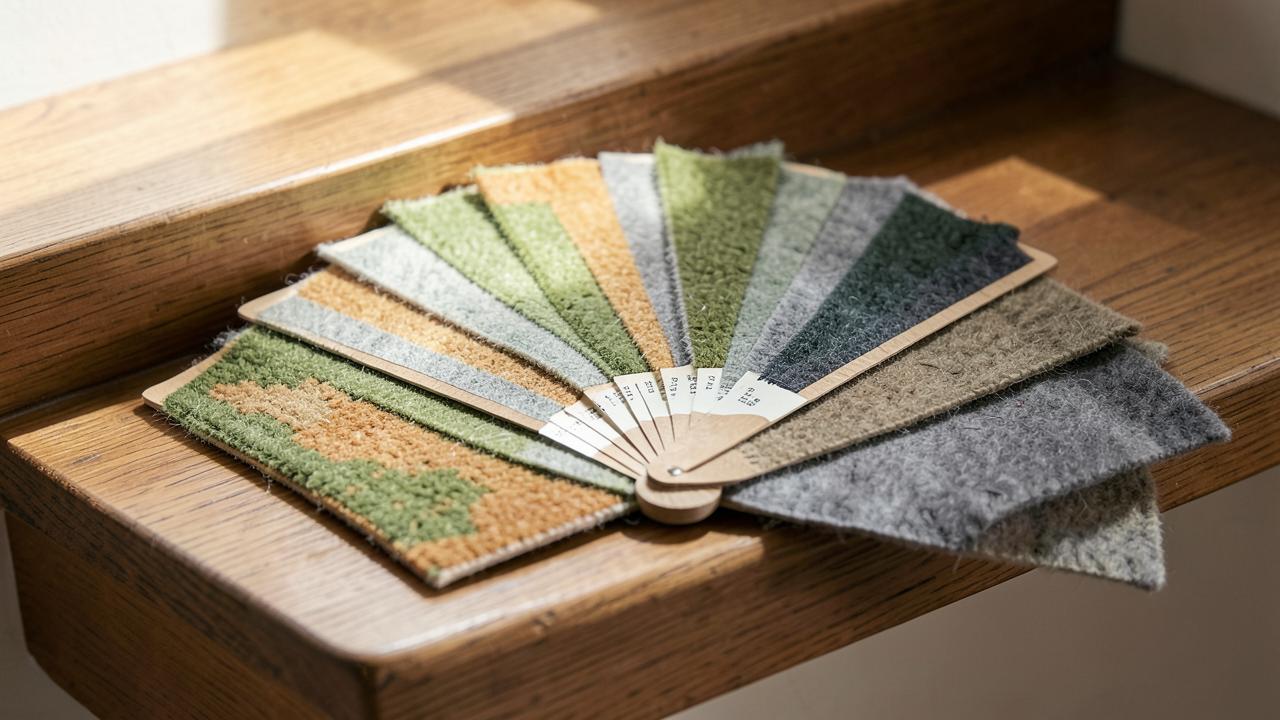
Where a tiger stripe or a leopard spot reads clearly as a motif from across a hallway, antelope print is built from a much finer, more irregular scatter of marks. Seen from a normal viewing distance — standing at the bottom of the stairs, say, or glancing down from a landing — it presents as a subtly mottled neutral rather than an obvious pattern. Only up close, kneeling on a tread, does the speckled structure of the print become apparent. This makes it the natural choice for anyone drawn to the practical case for a patterned runner — better disguise of dust, hair and everyday soiling than a flat solid colour — without wanting a visually assertive statement on the stairs.
Where antelope print fits among animal prints
| Pattern scale | Visual impact | |
|---|---|---|
| Antelope | Very fine, irregular speckle | Reads as subtle texture; low visual impact |
| Cheetah | Small, dense mottled spots | Moderate; clearly a print but not linear |
| Leopard | Medium rosette-style spots | Moderate to strong; classic animal-print statement |
| Tiger | Bold, irregular stripe | Strong; a clear focal point on the stairs |
| Zebra | Wide, high-contrast stripe | Very strong; the boldest of the common animal prints |
If a bolder print such as tiger or zebra feels too dominant for a particular hallway, antelope offers the same underlying practical logic — a broken, multi-tonal surface that hides everyday marks — in a far more restrained form. See tiger print stair runners and zebra print stair runners for the bolder end of the same category.
Colourways and where they suit
Antelope print is most widely available in warm neutral bases — ivory, oatmeal, soft camel and beige — flecked with a darker brown, taupe or charcoal mark. This warm neutral version sits comfortably in period hallways alongside timber floors, panelled walls and traditional joinery, acting almost like a natural stone or aged limestone finish underfoot rather than an obvious carpet pattern.
A smaller number of ranges offer a cooler, grey-based antelope print, pairing a pale grey or putty ground with a charcoal or graphite fleck. This version suits a more contemporary scheme, particularly where the rest of the hallway uses a similar cool neutral palette, and it tends to photograph and read slightly more graphic than the warmer versions.
Fibre and construction options
As with other animal prints, antelope pattern is produced in both printed and woven forms, and in wool-blend and fully synthetic fibres. A wool-rich blend gives the pattern more depth and a softer underfoot feel, and tends to be the choice for a formal or period hallway where the runner is walked on a moderate amount rather than constantly. A solution-dyed synthetic gives better resistance to fading and easier spot cleaning, which suits a busier family staircase or one that receives strong natural light through a stairwell window.
Because the pattern is fine, construction quality is more noticeable than it is with a bold print — a loosely tufted, low-density base can make the mottled pattern look slightly blurred or indistinct, whereas a denser, well-woven construction keeps the speckle crisp. Ask to see the specific product rather than relying on a swatch photograph, since photographic reproduction tends to sharpen fine patterns beyond how they actually appear in the fibre.
Framing an antelope print runner
Because the pattern itself is subtle, the frame around it does more visual work than it would with a bolder print. A clean bare timber margin either side of the runner, together with a simple solid-colour binding or border pulled from the darker fleck tone, gives the eye a clear edge to register, which in turn makes the runner look considered rather than simply a length of speckled carpet laid down the middle of the stairs. General guidance on getting margin width right for the stair in question is set out in how wide should a stair runner be, and border options are covered in bordered stair runners.
Practical performance
The main practical argument for antelope print is the same as for any multi-tonal patterned carpet: it disguises everyday soiling, pet hair and light traffic marks considerably better than a plain solid colour of similar overall tone. Because the speckle is fine and evenly distributed rather than concentrated in large shapes, this effect holds true even in the narrow traffic lane down the centre of each tread, which is where a plain runner shows wear first.
This does not remove the underlying importance of choosing a fibre and construction suited to the level of use the stairs actually get. A fine wool-rich antelope print on a heavily used family staircase will still show matting and wear in the traffic lane over time if the pile density is not adequate for the traffic level; pattern disguises soiling, not structural wear. See durable stair runners for how to match construction to traffic level regardless of the surface pattern chosen.
Setting the surrounding scheme
Antelope print's understated character means it rarely dictates the rest of a scheme the way a bold animal print can. It sits comfortably alongside patterned wallpaper, a painted staircase, or a gallery wall running up the stairwell, because its own pattern recedes rather than competes. This makes it a practical choice for households who want to change other elements of the hallway decor over time without the stair runner needing to be replaced to match.
Antelope print beyond the stairs
Because it reads so close to a textured neutral, antelope print extends naturally into an adjoining hallway runner or landing carpet without the change of scale that a bolder print can suffer from when moved onto a larger floor area. This makes it a practical choice where the same pattern is wanted continuously from the front door, along the hall, up the stairs and across a landing, rather than treating the stair runner as an isolated feature. See stair runner and landing carpet for how to plan that continuity.
Choosing between antelope print and a plain neutral
If antelope print is being considered mainly for its practical soiling-disguise properties rather than any aesthetic preference for the print itself, it is worth comparing directly against a genuinely flecked or heathered plain carpet, which offers a similar forgiveness without the animal-print reference at all. The choice then comes down to whether the subtle organic irregularity of a genuine antelope pattern is preferred over the more even, manufactured fleck of a standard heathered neutral — both are legitimate routes to the same practical outcome. See neutral stair runners for the plain alternative.
Living with antelope print day to day
Households who choose antelope print often report that it simply fades into the background of daily life in a positive sense: it does not demand redecoration around it, it does not date quickly the way a more fashionable bold print can, and it continues to disguise the ordinary wear of a busy household stair long after the initial choice was made. This combination of low maintenance visual demand and genuine practical forgiveness is why it remains a consistently popular, if quieter, choice within the animal-print category.
Common questions when specifying antelope print
- Printed or woven? A woven jacquard version keeps the speckle visible through the depth of the pile as it wears; a printed version is generally more affordable but the surface pattern will gradually fade in the heaviest traffic areas over the life of the carpet.
- Warm or cool base? Match the undertone of the base colour to the surrounding timber and wall colours rather than choosing in isolation from a small sample.
- Border or no border? A subtle print generally benefits from a defined border more than a bold one does, since the border does more of the work of framing the runner visually.
- Wool or synthetic? Match to expected traffic and household composition rather than to appearance alone, since both fibres are available in this pattern.
Care and cleaning
Antelope print runners are cared for in the same way as any patterned stair carpet: regular vacuuming of the traffic lane to remove the grit that accelerates wear, prompt blotting of spills rather than rubbing, and periodic professional cleaning rather than repeated home treatments that can dull a fine pattern over time. Because the pattern is subtle, any patchy fading or wear is also more noticeable against the surrounding fibre than it would be on a bolder print, so it is worth being slightly more attentive to spot cleaning consistency across the full width of the runner. Full guidance by fibre type is in cleaning and caring for a stair runner.
Ordering and fitting
Because the print is fine and irregular rather than a large directional repeat, pattern matching across a join or around a winder is generally less demanding than it is for a bold stripe. It is still worth confirming with your fitter how any join will be positioned and how the pattern will be handled on winders if the staircase turns, and allowing a realistic length calculation that accounts for any pattern matching required. See how to measure for a stair runner and stair runner installation for the wider process.
Budget considerations
Antelope print runners are typically priced in line with other woven or printed patterned carpets, sitting above a plain synthetic runner and, for wool-rich woven versions, above a printed synthetic equivalent. Because the pattern itself is fine rather than large and directional, the extra length usually required for pattern matching tends to be modest compared with a bold stripe, which can make antelope print a comparatively economical route into a patterned stair runner. For general cost structure, see stair runner cost in the UK.
Frequently asked questions
- What does an antelope print stair runner actually look like?
- It is a fine, irregular speckled or mottled pattern, closer in scale and texture to a scattering of small marks than a bold stripe or large spot. It reads at a distance as a subtly textured neutral, and only reveals the animal-print reference on closer inspection.
- Is antelope print a subtler choice than leopard or tiger?
- Generally yes. The pattern is finer and lower contrast than most other animal prints, which makes it a popular choice for anyone who wants the practical benefits of a patterned runner — good disguise of everyday soiling — without a strong or theatrical visual statement.
- What colours does antelope print typically come in?
- Most commonly a warm neutral base, such as ivory, oatmeal or beige, with darker fleck in brown, taupe or charcoal. Some ranges offer cooler grey-based versions for a more contemporary palette.
- Does antelope print suit a plain, understated hallway?
- Yes, this is where it performs best. Because the pattern is fine and low contrast, it works well as texture within a calm, neutral scheme rather than as a standalone feature, which suits hallways where the client wants durability and forgiveness without introducing a visual statement.
- Is antelope print carpet durable enough for daily stair use?
- The pattern itself does not affect durability; that comes from the fibre and construction. Antelope print runners are available in both wool-blend and synthetic constructions of varying density, so durability should be assessed the same way as for any plain runner.
- Can antelope print be used with a bordered runner?
- Yes, and it often benefits from one. Because the pattern is subtle, a simple contrast border in a solid colour taken from the darker fleck helps define the edge of the runner clearly against the bare stair margin either side.
Related guides
- DesignAnimal Print Stair Runners: A Buying GuideChoosing an animal print stair runner: scale, colour depth, fibre and how leopard, zebra and other prints work on real treads and risers.
- DesignCheetah Print Stair Runner Design & FittingThe definitive guide to cheetah print stair runners. Understand the difference between cheetah and leopard, choosing the right spot scale, and expert styling advice.
- DesignLeopard Print Stair Runner Styling & SelectionHow to select and install a leopard print stair runner. We cover pattern scale, matching at the seams, hiding traffic wear, and balancing bold print with your hallway decor.
- DesignTiger Print Stair RunnersHow to choose and specify a tiger-print stair runner, from stripe scale and colourway to fibre, pile and where it works best in a scheme.